Introduction
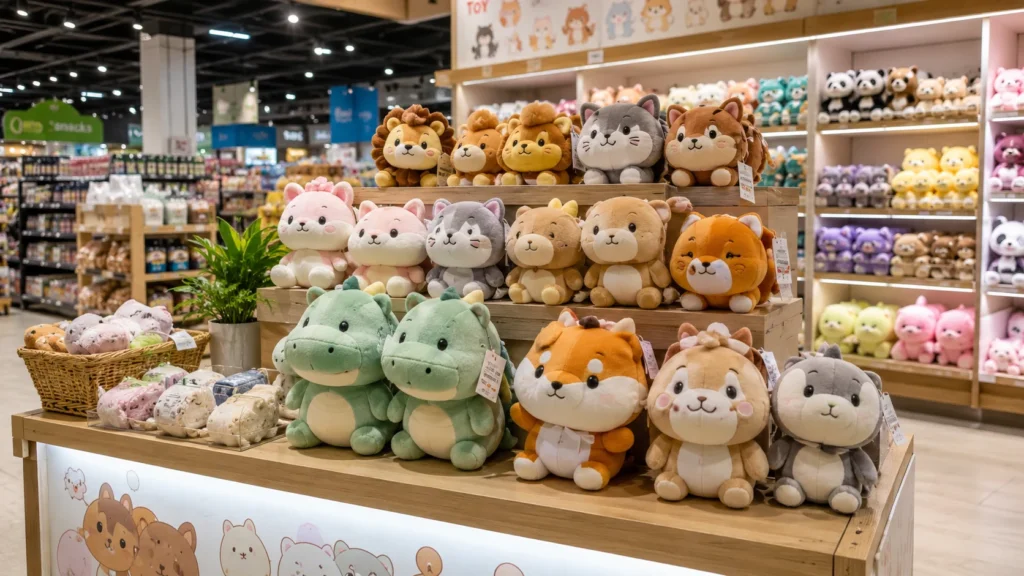
Custom plushies are becoming an attractive product choice for retail chains, supermarkets, gift shops and brand promotion teams that want to create friendly, collectible and memorable products for their customers.
Unlike one single plush toy, a collectible plushie collection is usually developed as a series. It may include several characters, colors, animals, mascots or themed designs. This makes plushies suitable for retail loyalty campaigns, supermarket promotions, gift-with-purchase programs, seasonal events and branded merchandise collections.
For many B2B buyers, the goal is not simply to order a random soft toy. The goal is to create a plushie collection that customers want to collect, share, gift and remember.
This guide explains how retail chains and gift buyers can build custom plushies, including character planning, product size, fabric selection, branding, packaging, MOQ, sample development, production planning and quality control.
Quick Summary
In this guide, you will learn:
- What custom plushies are
- Why retail chains use collectible plushie collections
- The difference between plushies, plush toys and stuffed animals
- How to plan a plushie collection
- Character ideas for retail and supermarket campaigns
- Size, fabric and safety considerations
- Packaging ideas for collectible plushies
- MOQ, sampling and production planning
- Quality points to check before mass production
- How Superstar supports custom plushie projects from China
What Are Custom Plushies?
Custom plushies are soft plush products made according to a buyer’s design, character, theme, brand idea or promotional concept.
They can be made as:
- Animal plushies
- Character plushies
- Brand mascot plushies
- Food-shaped plushies
- Holiday plushies
- Mini plushies
- Collectible plushies
- Supermarket promotional plushies
- Retail plush toy collections
- Plush keychains
- Plush bag charms
- Gift-with-purchase plush products
The word “plushies” is often used in a more casual and modern way than “plush toys.” It is especially common when buyers refer to cute, collectible, character-based or retail-friendly soft toys.
For manufacturing and sourcing, custom plushies can include many product types, such as stuffed animals, plush mascots, plush keychains, character plush toys and branded plush gifts.
If you are looking for broader plush product ideas, you can also read our guide on custom plush mascots for brands and events.
Why Retail Chains Use Collectible Plushie Collections
Retail chains and supermarkets often look for products that can increase customer engagement. A collectible plushie collection can support that goal because customers may want to collect several characters instead of buying only one item.
Custom plushies can be used for:
- Retail loyalty campaigns
- Supermarket promotional programs
- Gift-with-purchase activities
- Seasonal sales campaigns
- Brand anniversary events
- Kids’ promotions
- Family shopping events
- Holiday campaigns
- Membership reward programs
- Limited-edition merchandise
For example, a supermarket chain may create a series of six animal plushies. Customers can collect one plushie after reaching a certain spending amount, or purchase plushies as part of a seasonal campaign. This kind of program can help improve repeat visits and customer participation.
If your retail campaign depends on repeat purchases, a collectible plushie collection usually works better than a single plush toy because customers have a reason to collect more designs.
Plushies vs Plush Toys vs Stuffed Animals
Many buyers use the words plushies, plush toys and stuffed animals in similar ways, but there are small differences in how these terms are used.
| Term | Common Meaning | Typical Use |
|---|---|---|
| Plush toys | A broad and formal product term | B2B sourcing, manufacturing, product pages |
| Stuffed animals | Animal-shaped soft toys | Teddy bears, rabbits, dogs, cats, zoo animals |
| Plushies | Cute, collectible or character-based soft toys | Retail collections, fan products, promotional campaigns |
| Plush mascots | Plush products based on a brand or event character | Brand campaigns, sports teams, events |
| Plush keychains | Small plush products with keyring accessories | Giveaways, souvenirs, retail accessories |
For SEO and B2B sourcing, “custom plush toys” and “custom stuffed animals” are still important keywords. But for real buyer language, “custom plushies,” “collectible plushies” and “plushie collection” are also valuable terms.
A good plush category page should include all of these terms naturally.
How to Plan a Plushie Collection
A collectible plushie collection should be planned as a product series, not as separate random designs.
Before production, buyers should think about:
- How many plushies are in the collection
- Whether the designs share one theme
- Whether each character has a different personality
- Whether the colors match the brand or campaign
- Whether the size is suitable for retail display
- Whether packaging can show the collection clearly
- Whether customers have a reason to collect multiple designs
A common retail plushie collection may include:
| Collection Type | Example |
|---|---|
| Animal collection | Bear, rabbit, dog, cat, panda, fox |
| Food collection | Fruit plushies, dessert plushies, snack characters |
| Holiday collection | Christmas plushies, Halloween plushies, Easter plushies |
| Brand mascot collection | Several mascot expressions or outfits |
| City or culture collection | Local animal, landmark mascot, souvenir plushies |
| Supermarket campaign collection | Cute characters linked to shopping, food or family themes |
For retail chains, it is usually better to start with 4–8 designs. This is enough to create a collection effect without making the first project too complicated.
Character Ideas for Retail and Supermarket Campaigns
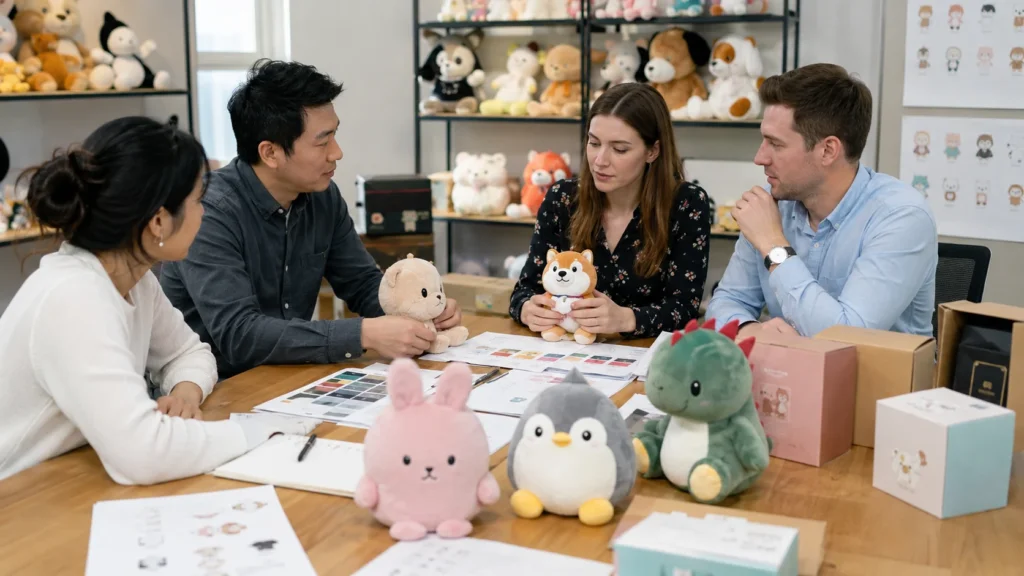
The right character idea depends on the buyer’s brand, customer group and campaign goal.
Here are some common directions:
1. Animal Plushies
Animal plushies are easy to understand and suitable for families, children and gift shoppers.
Popular ideas include:
- Teddy bear plushies
- Rabbit plushies
- Dog plushies
- Cat plushies
- Panda plushies
- Fox plushies
- Dinosaur plushies
- Farm animal plushies
- Zoo animal plushies
Animal plushies are a safe choice for many retail campaigns because they are cute, familiar and easy to collect.
2. Food-Themed Plushies
For supermarkets, food-themed plushies can be especially relevant.
Examples include:
- Fruit plushies
- Vegetable plushies
- Bread plushies
- Milk bottle plushies
- Snack character plushies
- Dessert plushies
- Coffee cup plushies
These designs can connect directly with supermarket identity and shopping habits.
3. Brand Mascot Plushies
If a retail chain has a mascot or brand character, it can be turned into a plushie collection.
Possible variations include:
- Different outfits
- Different facial expressions
- Different seasonal themes
- Different sizes
- Limited-edition versions
- Plush keychain versions
For larger character-based projects, you can also read our guide on custom plush mascots for brands and events.
4. Seasonal Plushies
Seasonal plushies can support holiday sales and themed campaigns.
Examples include:
- Christmas plushies
- Easter plushies
- Halloween plushies
- Valentine’s Day plushies
- Back-to-school plushies
- Summer campaign plushies
If your project includes Christmas or holiday products, you can also explore our guide on custom Christmas decorations.
Size, Fabric and Safety Considerations
Custom plushies can be made in many sizes. The right size depends on the sales channel, budget, packaging and campaign method.
| Size Range | Suitable Use |
|---|---|
| 8–10 cm | Mini plushies, plush keychains, small giveaways |
| 12–18 cm | Retail collectible plushies and supermarket campaigns |
| 20–25 cm | Standard plush toys and gift products |
| 30 cm+ | Premium plush gifts, mascots or larger retail items |
For retail chains, 12–18 cm is often a practical range because the product is large enough to look valuable but still easy to display, pack and ship.
Common fabric options include:
- Short plush
- Super soft plush
- Velboa
- Fleece
- Faux fur
- Printed fabric
- Felt details
- Embroidered fabric
Common filling options include:
- PP cotton
- Recycled filling options
- Beans or pellets for weighted parts
- Mixed filling for shape control
Safety and compliance should also be considered, especially if the plushies may be used by children. Buyers should confirm the target market and required testing standards before production.
For products that may be used by children, buyers should also review product safety requirements in the target market, such as the European Commission’s EU product safety information.
For EU plush toy requirements, you can read our article about custom plush toy compliance.
Branding Options for Custom Plushies
Branding can be added in several ways. For plushies, the logo does not always need to be placed directly on the toy body. Sometimes packaging, tags and labels are more suitable.
Common branding options include:
- Embroidered logo
- Printed logo
- Woven label
- Care label
- Hang tag
- Custom paper tag
- Header card
- Gift box
- Display box
- Barcode label
- QR code card
- Collection card
For retail chains and supermarkets, barcode labels and product information cards are important because they help with inventory management and in-store sales.
If you are planning retail-ready packaging, you can also read our guide on custom product packaging from China.
Packaging Ideas for Collectible Plushies
Packaging is especially important for collectible plushies because it helps customers understand the collection.
Common packaging options include:
- Polybag
- Hang tag
- Paper header card
- Display box
- Window box
- Gift box
- Countertop display tray
- Blind bag
- Collection card
- Retail shelf display
- Barcode sticker
- QR code card
For supermarket campaigns, buyers may choose simple packaging if plushies are distributed as promotional rewards. For gift shops or retail sales, display boxes and hang tags can make the plushies look more complete.
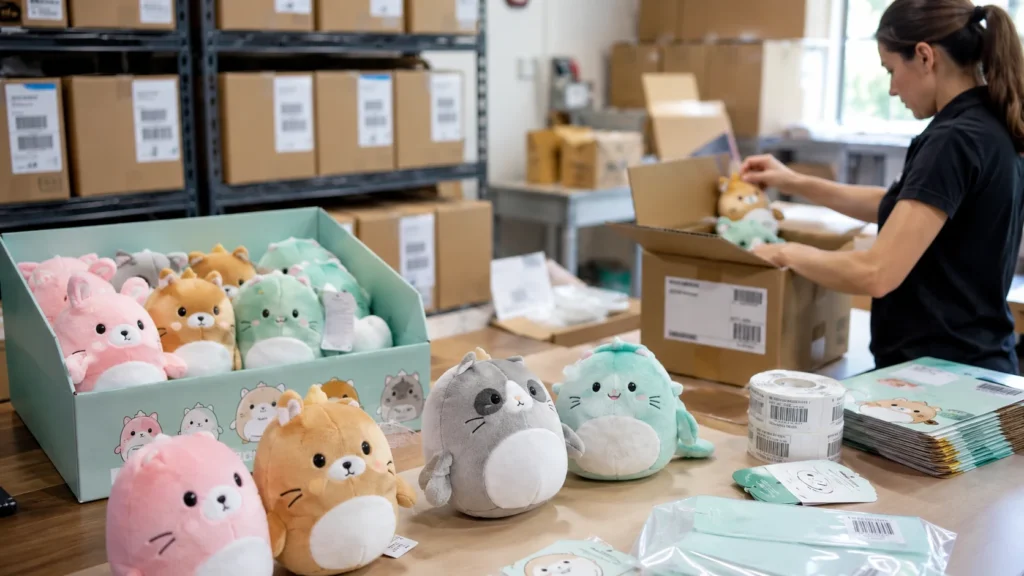
For collectible plushies, packaging should show the collection idea clearly. A hang tag, collection card or display box can help customers understand that there are multiple designs to collect.
MOQ, Sampling and Production Planning
MOQ is an important question for custom plushies. The minimum order quantity may depend on the design complexity, fabric availability, number of styles, logo method and packaging requirements.
For a plushie collection, buyers should consider:
- MOQ per design
- Total collection quantity
- Number of characters
- Fabric colors
- Embroidery details
- Packaging method
- Sample cost
- Production time
- Shipment deadline
For example, a collection with 6 plushie designs may require a different MOQ structure than a single plush toy. If every design uses different fabric colors, embroidery and accessories, the supplier may need to calculate each style separately.
If you are planning a collectible plushie collection, you may also want to understand MOQ for custom plush toys before requesting a quote.
Quality Points to Check Before Production
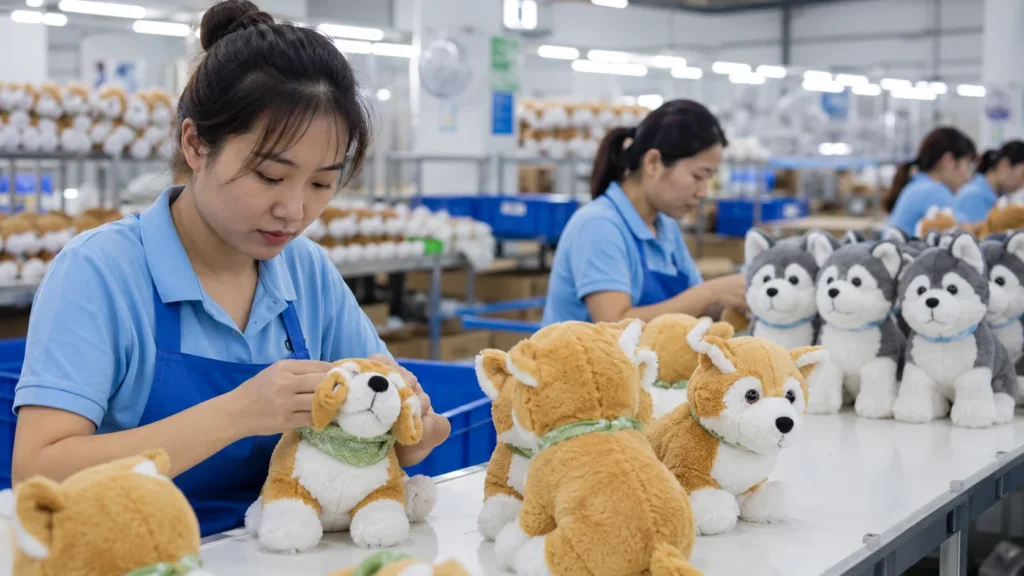
Before mass production, buyers should carefully review the sample plushies.
Important quality points include:
- Character shape
- Face expression
- Fabric softness
- Fabric color
- Embroidery quality
- Printing quality
- Stitching strength
- Filling balance
- Size accuracy
- Logo position
- Label position
- Accessories
- Packaging
- Barcode or tag information
- Carton packing
For a plushie collection, consistency is also important. All characters should feel like they belong to the same series. The size, style, label system and packaging should be coordinated.
What Buyers Should Prepare Before Requesting a Quote
To get a more accurate quote for custom plushies, buyers should prepare clear project information.
Useful details include:
- Product idea
- Reference images
- Character sketches
- Target size
- Number of designs
- Quantity per design
- Fabric preference
- Logo requirements
- Packaging requirements
- Target market
- Safety or testing requirements
- Delivery deadline
- Shipping destination
- Target price range
- Campaign purpose
If you do not have finished artwork, you can still provide examples and explain the style you want. A sourcing partner can help suggest suitable product structures, fabric choices and packaging options.
Common Mistakes to Avoid
When developing custom plushies for retail chains, buyers should avoid these common mistakes:
- Creating too many designs for the first project
- Choosing designs that are too complicated for the target price
- Ignoring packaging and barcode needs
- Not confirming safety requirements
- Not planning the full collection structure
- Using low-resolution artwork
- Not allowing enough time for samples
- Forgetting shipment and campaign deadlines
- Focusing only on unit price and ignoring quality consistency
A successful plushie collection should be cute, consistent, practical and aligned with the retail campaign.
How Superstar Supports Custom Plushie Projects
Superstar helps overseas buyers develop custom plushies, collectible plushie collections, stuffed animals, plush mascots, plush keychains and other custom plush products from China.
We can support:
- Product idea discussion
- Character and collection planning
- Material suggestions
- Size and structure options
- Sample follow-up
- Label and packaging coordination
- Quality checking
- Production communication
- Consolidation with other gift products
- Shipment preparation
For retail chains, supermarkets and promotional buyers, we can also help coordinate related items such as gift boxes, tags, labels, display packaging, keychains and other custom promotional gifts.
If your project includes several product categories, our one-stop sourcing from China service can help coordinate sourcing, packaging and shipment preparation.
If you are still comparing suppliers before placing an order, you can also read our China sourcing partner checklist.
FAQ
What are custom plushies?
Custom plushies are soft plush products made according to a buyer’s design, character, mascot, brand idea or retail campaign theme. They can include animals, mascots, characters, food shapes, seasonal designs and collectible plushie collections.
What is the difference between plushies and plush toys?
Plush toys is a broader and more formal product term, while plushies is often used for cute, collectible or character-based soft toys. In custom manufacturing, both terms can refer to similar products.
Can you make collectible plushies for retail chains or supermarkets?
Yes. Superstar can help develop collectible plushies for retail chains, supermarkets, gift shops and promotional programs, including character planning, sample development, fabric selection, packaging and bulk production.
How many designs should a plushie collection include?
Many buyers start with 4–8 designs for the first collection. This creates a clear collectible series while keeping the first project easier to manage.
What packaging is suitable for collectible plushies?
Common options include hang tags, display boxes, window boxes, polybags, collection cards, barcode labels, blind bags and retail display trays.
Can Superstar help with custom plushies from China?
Yes. Superstar can support custom plushie development, sampling, packaging, quality checks and shipment preparation from China.
Need Custom Plushies for Your Retail Chain or Brand?
Send us your plushie collection idea, reference images or campaign requirements. Superstar can help develop custom plushies, collectible plushie collections, samples, packaging and sourcing solutions from China.