Buying unstuffed plush skins for a stuffing machine starts with the finished animal and works backward to the opening, closure and shell construction. A product photograph can help you shortlist designs; it cannot establish that an unfilled shell will pass through your particular nozzle or close neatly after filling. This guide shows what to measure, what to test on a sample and what to include in an RFQ before ordering in bulk.
For available product directions, compare our unstuffed teddy bear skins with the other unstuffed animal shells. The unstuffed plush range is the broader starting point when your program may use more than one character.
Are you ordering unstuffed plush skins or finished stuffed animals?
The bulk product on these pages is an unfilled outer shell. The buyer fills it later as part of a workshop, attraction, retail activity or another local process. The quotation should say exactly which components arrive with the shell: for example, the agreed fabric body, facial details, access opening, closure, label and individual packing. Do not assume that loose fiber, clothing, certificates, sound inserts or other accessories are included.
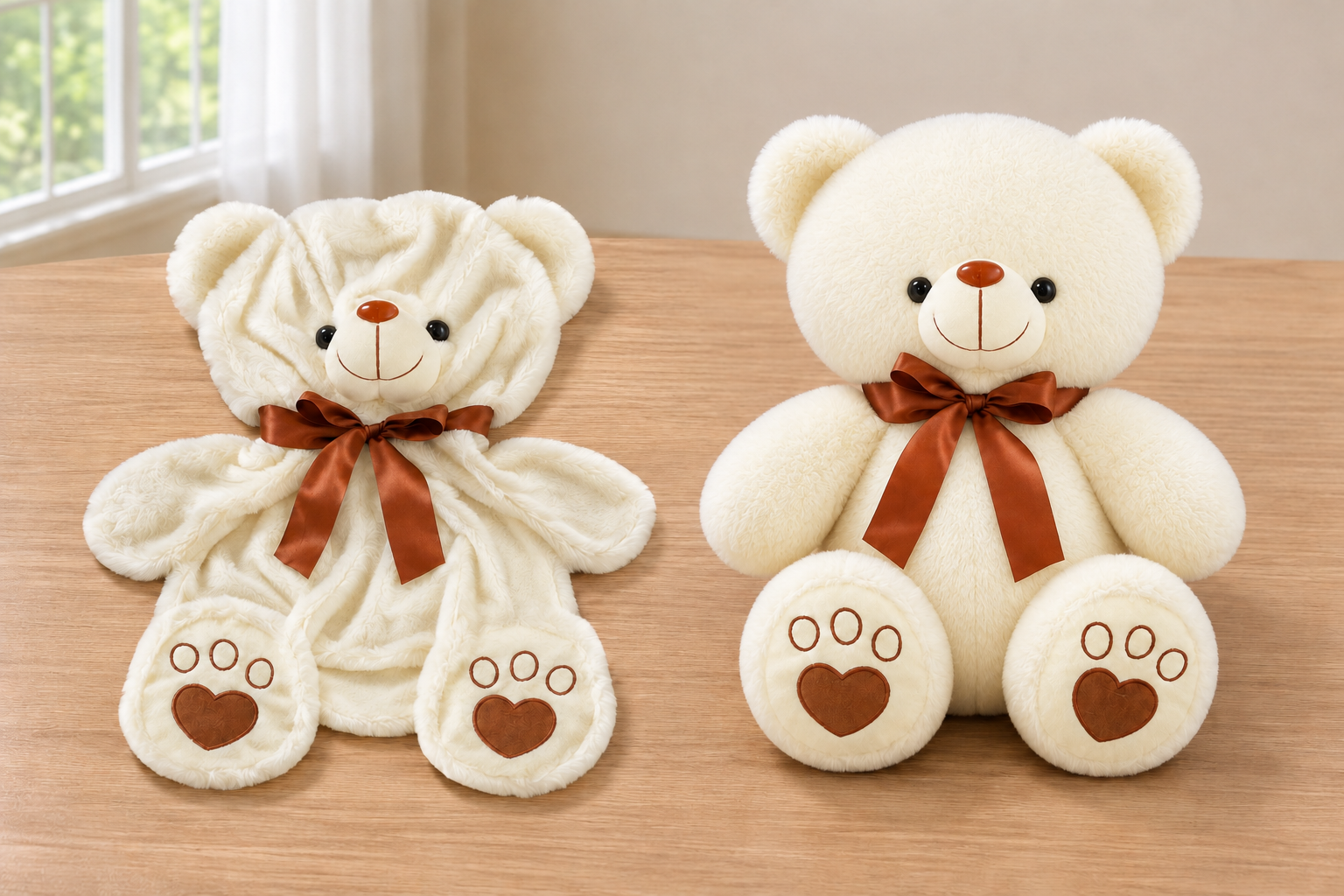
A filled prototype is developed during sampling so you can judge the intended three-dimensional shape and proportions. That approval sample is a development reference; it does not change the bulk delivery into pre-filled toys. Ask to review both the finished appearance and the unfilled opening before approving production.
Which stuffing-machine measurements should your supplier receive?
Send the machine make and model, but do not stop at the model name. Give the nozzle diameter or profile at the part that enters the shell, the usable insertion length and any guards or fittings that affect access. A close-up photograph with a ruler can prevent confusion between the pipe diameter and the wider fitting around it. If you operate two machine types, list both.
Then describe the opening you need on the shell: its usable width, preferred position, how the fabric should sit around the nozzle and whether the operator must reach inside to distribute filling. The workable opening depends on the actual machine, shell pattern, fabric and stuffing method. A supplier can develop to those inputs, but machine compatibility should be confirmed on a sample with your actual equipment.
- Machine: make, model, nozzle dimensions and photographs of the full filling head.
- Operation: whether filling is manual or machine assisted, and how the operator holds and removes the shell.
- Shell access: preferred location, usable opening width and any obstruction from a tail, garment or trim.
- Finished result: intended firmness, silhouette and closure appearance after filling.
Does a 12-inch or 16-inch plush skin refer to the filled toy?
A size label is useful only if both sides measure the same thing. State whether 12 or 16 inches means the finished toy after filling, the flat shell laid on a table or another reference dimension. For a bear, also identify the measuring points: head to foot, seated height or another agreed axis. A long-leg design and a seated bear can share a nominal label while having very different usable proportions.
Send your target finished dimensions and a reference photo with a scale. During sampling, compare the filled prototype against those dimensions and the intended retail or workshop presentation. If your filling density changes, the final height and width may change too. Record the approved measurement method with the sample instead of assuming the flat shell length predicts the finished result.

Which opening and closure details matter after filling?
The filling opening must be large enough for the agreed operation and placed where it does not spoil the character. A zipper is the common option on the current unstuffed plush range; another closure can be assessed and quoted for an approved design. Specify the closure type, its location, how it should look when shut and who closes it during the activity.
Test more than the empty shell. Fill the sample to the planned firmness, close it using the real operator procedure and look at the seam from the front, side and back. Check whether fabric is trapped, the closure remains accessible, the shape is balanced and the finished toy matches the approved appearance. If an event involves children, the responsible buyer must also review the finished toy and its intended use against the destination-market requirements.
What should you approve on the plush-skin sample besides machine fit?
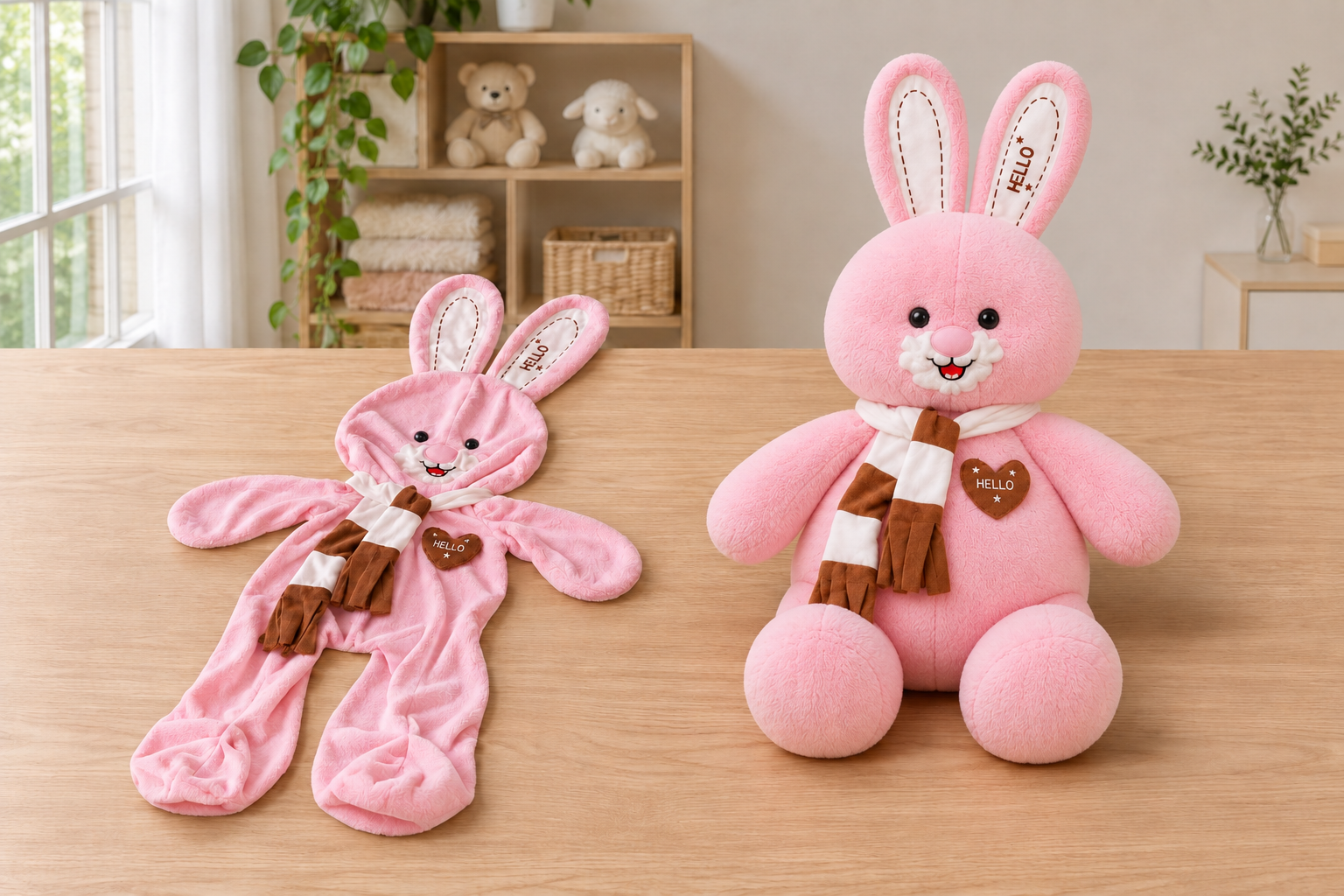
An opening that fits the nozzle will not rescue a character whose face, fabric or proportions are wrong. Compare the sample with your artwork or reference and record decisions on fabric type and pile, color, embroidery or appliqué, facial alignment, seams, labels and packing. View the filled prototype and the unfilled shell together: one shows the finished look, while the other exposes the construction the operator will handle.
For teddy bear skins, check that the muzzle, eyes and limbs sit symmetrically after filling. For other animal shells, the filling may need to reach long ears, tails, wings or narrow limbs without distorting the outline. Keep those design-specific checks in the approval record rather than using a generic “sample approved” email.

How do MOQ, mixed designs and optional components affect the quote?
For a custom design, the stated MOQ is 1,000 pieces per design. For an available stock design, the stated MOQ is 200 pieces per design, subject to confirming the exact style, color and current stock. These are separate order routes: do not apply the stock MOQ to a new custom design or combine different designs to reach one per-design minimum. If you need less than the applicable MOQ, ask for a separate availability review; an exception is not guaranteed.
State whether each line is a custom design or a stock design, then list quantities per design, size and color. Ask the supplier to itemize unfilled shells, optional filling materials, garments, hangtags, labels, retail bags and cartons. If the brief includes an opening modification or a new closure, put it on the same design line so the sample and unit price reflect the intended construction. A lower unit price for a bare shell is not directly comparable with a quote including accessories and packaging.
For a workshop with both bears and other animals, the commercial pages help you compare the bear skins and animal shells ranges. This guide focuses on the measurements and approvals to send before asking for those prices.
If you are planning the animal assortment and opening stock for an activity venue, use our stuff-your-own plush workshop sourcing guide to organize quantities per design, optional components and repeat orders.
What timeline and destination details belong in the RFQ?
For custom orders, the current product pages list 10–15 days for sampling and 40–45 days for production after sample approval. For stock orders, confirm current availability and dispatch timing for the exact design and quantity. Treat these as the stated product-page lead times, not an arrival-date promise. Allow separately for sample shipment, your machine trial, any revision, final approval, inspection, transit and customs handling. Tell the supplier the event or launch date early so a workable plan can be discussed.
Give the destination country and delivery postcode, requested shipping terms, packaging format and any carton or labeling constraints. Freight can be priced against the approved quantity, packed volume, weight and route. If the finished toy will be sold or given to children, state the intended market and age group before sampling. The required safety assessment, tests, labels and documents depend on the final toy; our custom plush toy compliance guide explains the buyer questions to settle for EU projects.
How should you run the machine-fit trial before bulk approval?
Use the sample with the actual machine and the planned filling material. Record the nozzle and opening dimensions, then ask an operator to repeat the normal filling and closure process. This is a practical check of the agreed design, not a certification of every machine model. A second machine or a different filling material may require another trial.
- Photograph the empty shell, the opening and the machine nozzle side by side with a ruler.
- Check that the shell can be placed on and removed from the nozzle without forcing or catching fabric.
- Fill the head, body, limbs and any narrow sections to the target feel and shape.
- Close the opening using the intended staff procedure and inspect the finished seam.
- Compare finished dimensions, face placement and silhouette with the approved prototype.
- Record required changes and test a revised sample before approving bulk production.
What should you send in a first unstuffed-plush RFQ?
A useful RFQ lets the supplier identify the design, machine-fit and commercial questions in one review. Copy the following fields into your inquiry and mark any undecided item as “to confirm.”
- Program: workshop, attraction, retailer or other use; intended users and destination market.
- Characters: bear or other animal artwork, number of designs, colors and target finished size for each.
- Machine: model, nozzle measurements, photos, opening position and planned filling method.
- Construction: fabric, face details, opening, zipper or other proposed closure, label and packing.
- Quantity: specify custom or stock, then units per design, size and color. Custom MOQ is 1,000 pieces per design; available stock MOQ is 200 pieces per design, subject to availability confirmation.
- Options: whether to quote filling, garments, hangtags or other accessories separately.
- Schedule and delivery: sample deadline, event date, destination postcode and requested shipping terms.
The best next step is a sample brief tied to the real machine. Once the shell and filled prototype are approved, the commercial quote can refer to the same construction and quantity breakdown.
Quick answers before ordering
Are bulk unstuffed plush skins delivered without filling?
Yes. The current product pages describe bulk delivery as unfilled shells. A filled prototype is made during sampling to approve the final shape; filling materials are quoted separately when requested.
Can you guarantee a shell will fit our stuffing machine from its model name?
No. Send nozzle dimensions and photos, then verify the approved sample on your actual machine and with your planned filling method before bulk approval.
What does a 12-inch or 16-inch size request need to specify?
Identify whether the dimension refers to the finished filled toy or the flat unfilled shell, and state the measurement points and target finished proportions.
Is a zipper the only closure available?
A zipper is the common closure shown on the current range. An alternative can be assessed against the design and quoted after its construction and use are agreed.
Can we combine several animal designs to meet the MOQ?
Custom designs have a stated MOQ of 1,000 pieces per design. Available stock designs have a stated MOQ of 200 pieces per design, subject to confirming the exact style, color and current stock. Different designs do not automatically combine to meet one per-design minimum.
Can we order 100, 200 or 500 pieces?
For an available stock design, the stated MOQ is 200 pieces per design, subject to confirming the exact style, color and current availability. For a custom design, the stated MOQ is 1,000 pieces per design. A 100-piece request is below both stated minimums and needs a separate review.
Do unstuffed skins include stuffing, clothing and retail packaging?
The bulk product is an unfilled shell. Filling materials, accessories and packaging should be itemized and confirmed in the project quotation.
How long do sampling and bulk production take?
For custom orders, the stated times are 10–15 days for sampling and 40–45 days for production after sample approval. Stock availability and dispatch timing are confirmed for the exact order. Transport and customs time need separate planning.
Should we approve both the empty shell and a filled prototype?
Yes. The unfilled shell reveals the opening and closure construction; the filled prototype shows the intended shape, proportions and face placement.
Does a product photo or earlier report prove EU compliance for our finished toy?
No. Define the final design, materials, intended user and market, then confirm the applicable assessment, testing, labeling and documentation for that product.
Ready to Check Your Plush Skin Brief?
Send your animal designs, target finished size, machine nozzle measurements and quantity per design. We can review the sample and quotation requirements with you.