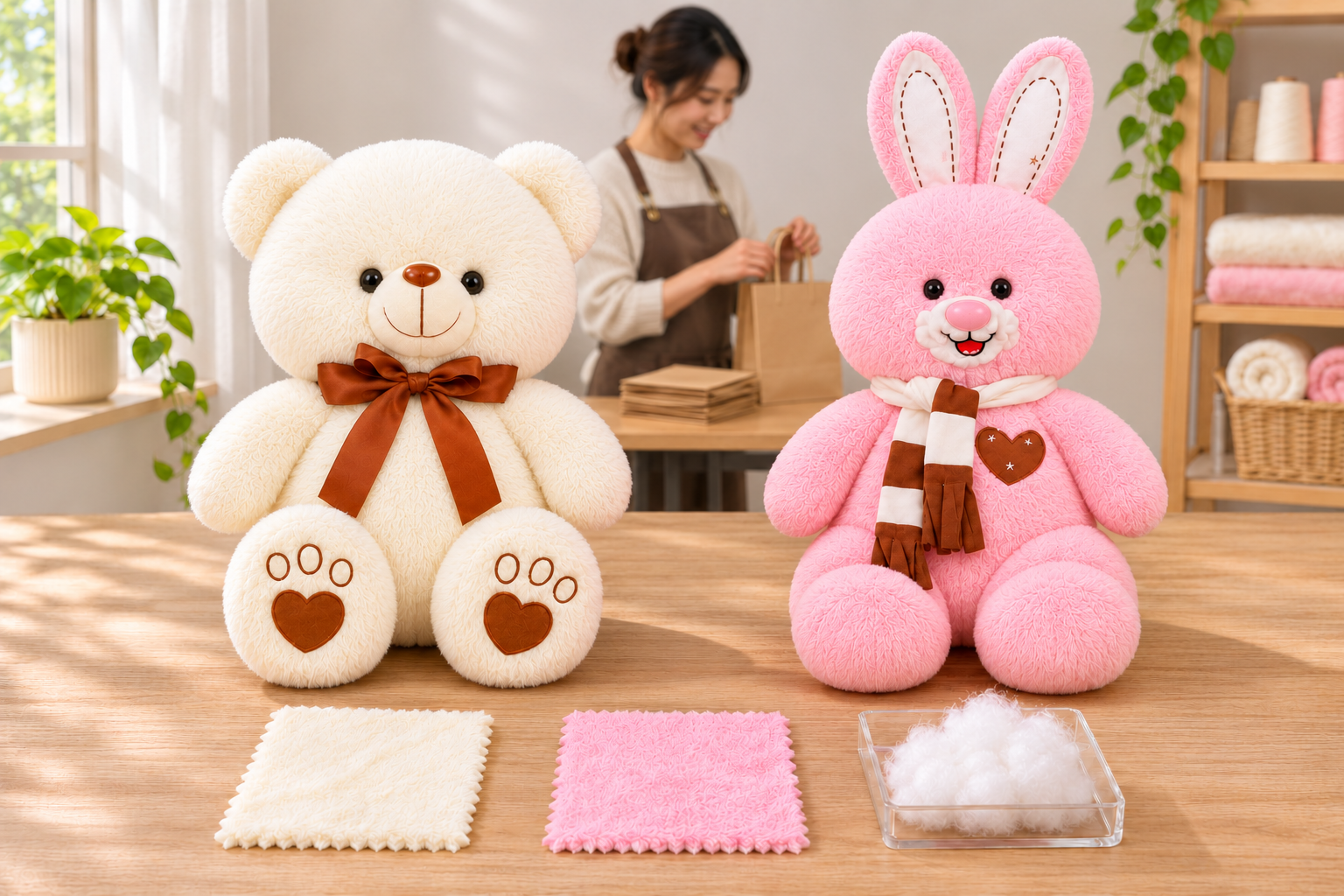
A stuff-your-own plush workshop starts with a purchasing plan: which animals guests can choose, how many shells to buy per design, what materials must be ready at the activity table and when the next order should arrive. Those decisions connect the customer experience to the budget and the stock you can realistically manage.
Start by choosing between available stock designs, with a stated MOQ of 200 pieces per design, and custom designs, with a stated MOQ of 1,000 pieces per design. Then build the assortment and delivery plan around each design separately. Stock styles, colors and quantities need current availability confirmation.
This guide is for attractions, activity businesses, retailers and workshop operators sourcing unfilled shells. Explore our unstuffed plush range to shortlist characters, then use the questions below to prepare an itemized inquiry.
Which customers and workshop format should shape your plush range?
Define who will take part, where the activity happens and how often it runs. A permanent retail station needs a repeat-order plan. A school-holiday program or a one-day event has a fixed use window and a different tolerance for leftover stock. An attraction may want animals connected to its location or theme. These are buying inputs to establish before choosing a large catalog of characters.
Write down the intended age group, whether sessions are booked or walk-in, expected participants per session and who will fill and close each toy. Ask your operations team how much space is available for display, storage and preparation. The finished animal, opening, closure and any accessories must suit that process.
For a new program without attendance history, prepare a modest-demand and a higher-demand scenario rather than treating one estimate as certain. Use your own bookings or comparable activity records where available. The supplier can review designs and quantities; projected attendance and guest preferences still need evidence from your business.
Should you choose stock plush skins or develop custom designs?
A stock route can make sense when a suitable existing animal fits the activity and you want to begin at the stated 200-piece minimum per design. Confirm the exact size, color, fabric, opening, closure and available quantity. A photo in the catalog identifies a design direction; the current quotation must identify what can actually be supplied.
A custom route suits a new animal, original mascot or specific construction brief. Its stated minimum is 1,000 pieces per design. Share artwork, finished dimensions and the intended filling process so the development review and sample reflect the actual project. Requests to change a stock animal or add branding need a separate assessment of price, quantity and timing.
| Order route | Stated MOQ | Confirm before ordering |
|---|---|---|
| Available stock design | 200 pieces per design | Exact style, color, size, available quantity and dispatch timing |
| Custom design | 1,000 pieces per design | Artwork, construction, filled prototype, sample approval and production schedule |
You can ask for stock and custom items in the same inquiry, but identify them as separate lines. Do not assume stock dispatch timing applies to a new custom design or that several different animals share one per-design minimum.
Which teddy bear and animal designs belong in the first assortment?
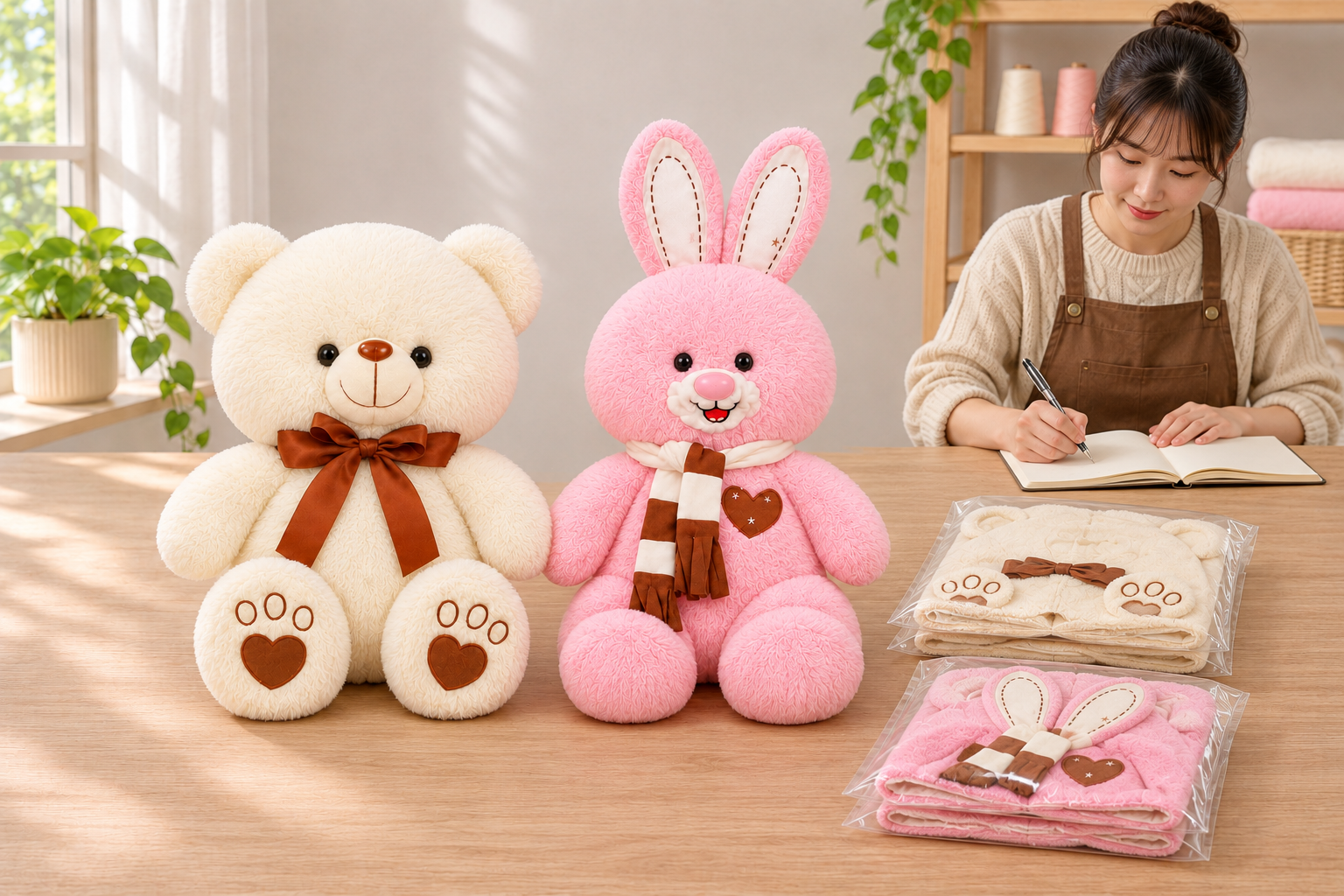
Shortlist animals that fit the audience and the venue before choosing the number of designs. A bear can provide a familiar character, while a rabbit or another animal can give guests a visibly different option. Review the teddy bear skins and other unstuffed animal designs as separate product choices, with their own dimensions and quantity requirements.
Give each candidate a role in the range: a core character you expect to reorder, a theme-specific option or a design you want to evaluate first. There is no evidence-based universal “best” number of animals for every workshop. The manageable range depends on your budget, storage, expected use and the MOQ for each design.
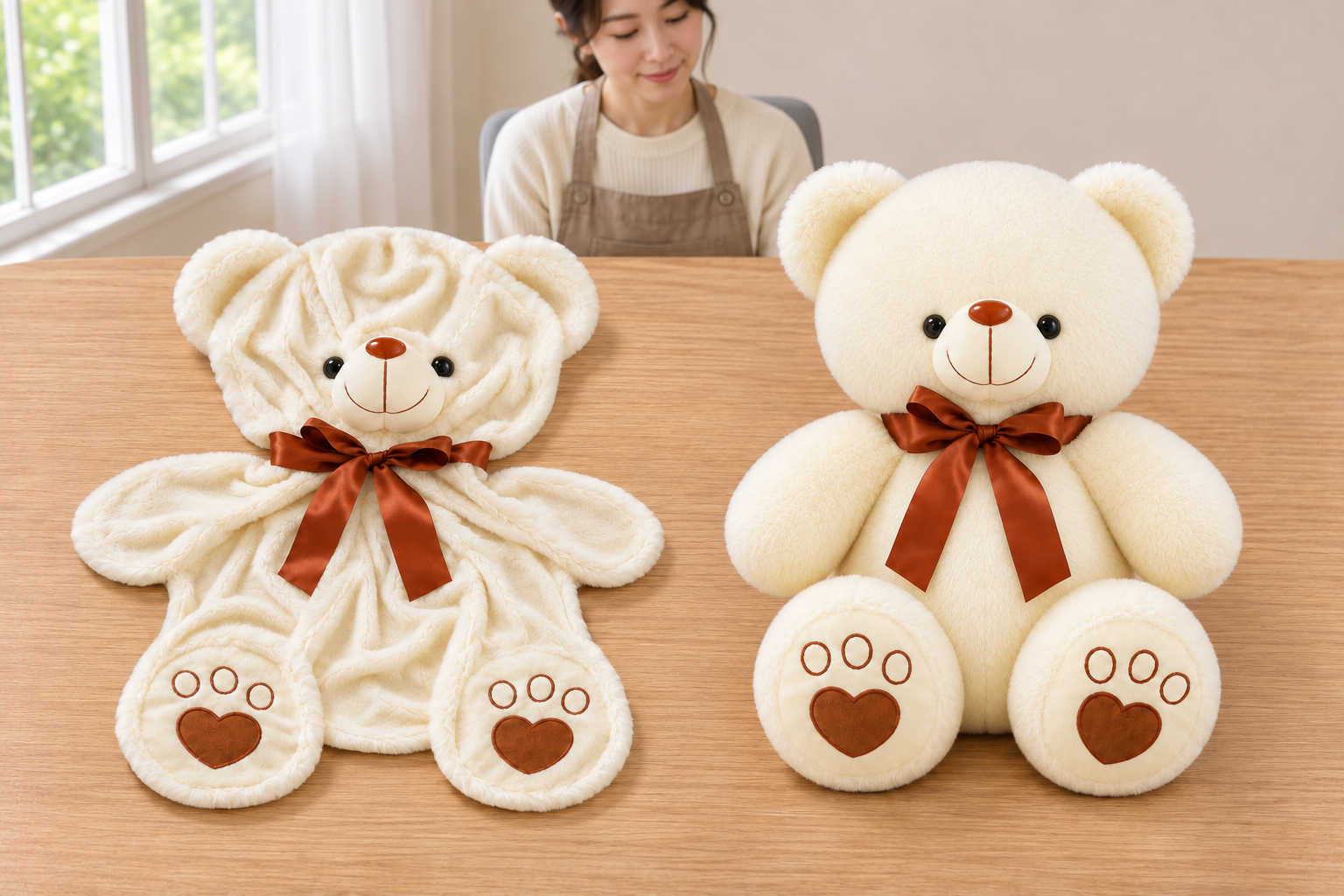
Compare the filled appearance with the empty shell during selection. A long-ear rabbit and a seated bear may use shelf space differently and need different filling attention. Approve a clear front view of the finished character, including symmetrical facial placement and a full, rounded head and body. Empty shells should be identified separately so the buyer understands what arrives for local filling.
How many unstuffed plush animals should you order per design?
Start with expected participation during the period the first order must cover. Multiply by the number of animals included per participant, then allocate that total across the shortlisted designs using your own preference estimates or sales history. Choose any reserve allowance deliberately and document its purpose. A blanket percentage cannot account for every event or replenishment cycle.
Next compare each design quantity with its applicable minimum. Three available stock designs at 200 pieces each total 600 pieces. Two custom designs at 1,000 pieces each total 2,000 pieces. These are arithmetic examples of the stated minimums, not recommended order sizes, a stock reservation or a price quotation.
| Design line | Stock or custom | Quantity per design | Planning input |
|---|---|---|---|
| Animal A | State route | State units | Expected use and desired cover period |
| Animal B | State route | State units | Preference estimate or prior use |
| Animal C, if needed | State route | State units | Theme, budget and remaining stock exposure |
If the minimums produce more stock than your program can use, reduce the number of designs or discuss suitable stock options. A 100-piece request falls below both stated minimums and needs a separate feasibility review. A mixed total does not automatically satisfy the minimum for each animal.
Keep the same design codes on your order sheet, cartons and usage record. This helps you distinguish an animal guests choose frequently from one that simply had a larger opening quantity.
Which filling materials, clothing and packaging should be quoted separately?
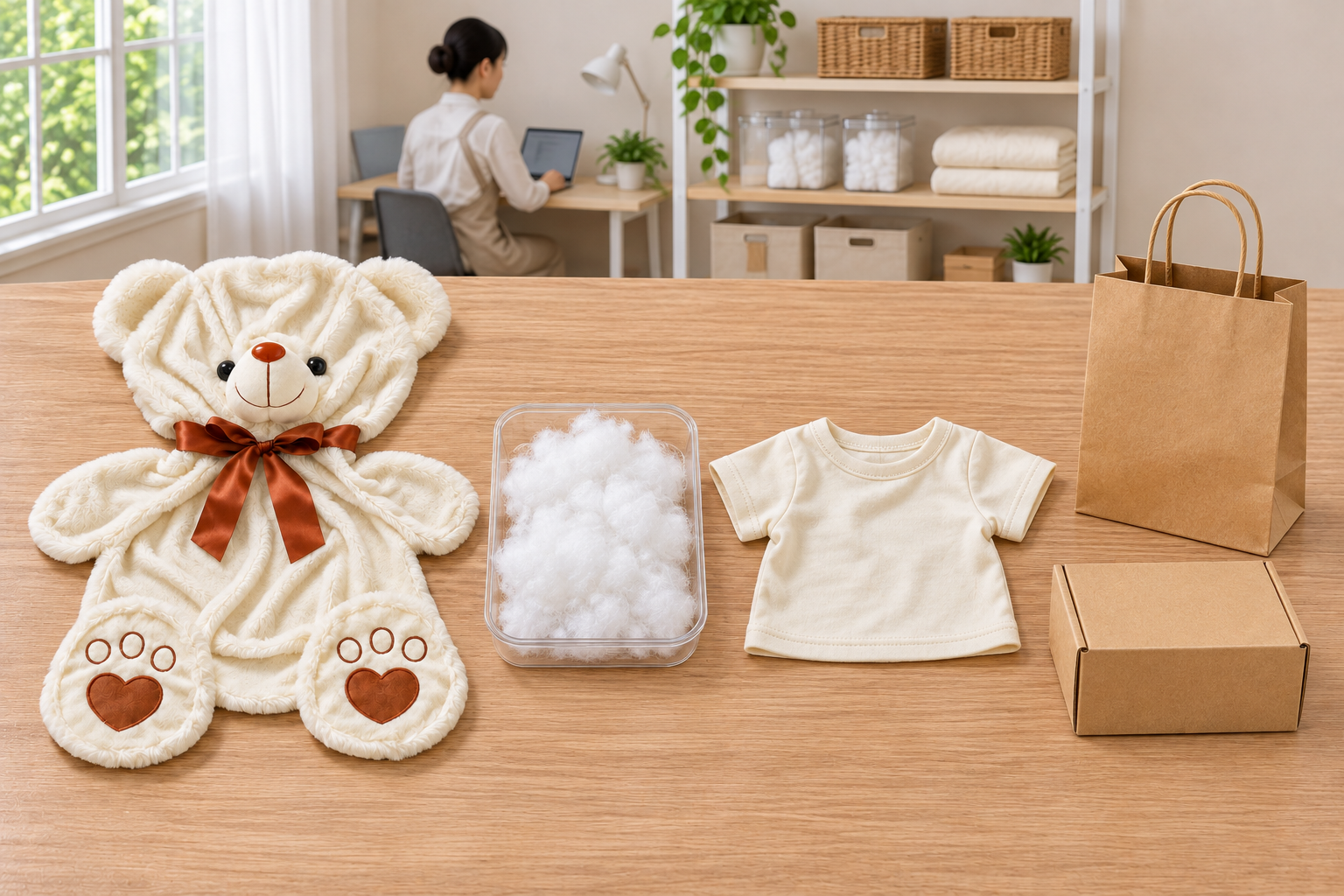
The unstuffed product is the sewn outer shell. List everything needed to turn it into the finished item at your venue: filling, any clothing, labels, hangtags, take-home bags and protective cartons. Ask for the agreed scope in writing so a shell-only price is compared with another shell-only price.
- Shell: animal design, fabric, finished size reference, facial details, filling opening and closure.
- Filling: whether you source it locally or request a separate quotation, and what sample will be used to judge the final feel.
- Clothing or accessories: each item, size, artwork and attachment requirement, subject to project confirmation.
- Presentation: label artwork, hangtag, bag or box and any required local-language information.
- Shipping packing: quantity per inner pack, carton requirements and design identification.
Do not treat a display of these components as a ready-made kit with one shared minimum. Ask the supplier to confirm each optional item, its quantity and its compatibility with the chosen animal. The filling and closure procedure also need to match the approved finished sample.
What should a workshop buyer approve before ordering in bulk?
Review the unfilled shell and a filled prototype together. Check fabric, color, face alignment, seams, opening, closure, label position and the finished shape. The filled toy should show the intended volume in the head, body and limbs. A folded empty shell can show construction, but it cannot establish the finished appearance.
Where a stuffing machine is involved, give the supplier the machine and nozzle measurements and trial a sample on the actual equipment. Record how staff fill narrow sections and close the opening. Keep these technical details in the sample brief; the animal selection and quantity plan should refer to that approved version.
State the intended market and user age before the sample is finalized. Agree which final design, materials and optional accessories the safety review and documents must cover. The plush toy compliance guide explains questions to discuss for EU projects. Avoid assuming an earlier report covers a different animal, filling material or accessory.
Maintain an approval record that names the design code, sample version, measurements, components and any agreed changes. This gives the first order and later repeat orders a common reference.
For the detailed nozzle, opening, finished-size and closure checks, see our unstuffed plush skins machine-fit and RFQ checklist before approving a sample.
How should you schedule the first delivery and repeat orders?
Work backward from the date the materials must be ready at the venue. For custom shells, the stated times are 10–15 days for sampling and 40–45 days for production after sample approval. Allow separately for artwork decisions, sample shipping, your filling trial, revisions, inspection, transport and customs handling. The production period alone is not an arrival-date commitment.
For stock designs, ask for current availability and dispatch timing for the exact quantity. If you also need new garments, branded packaging or another optional item, confirm whether those lines change the overall handover date. Ask what can be supplied together before assuming a mixed order has one schedule.
After launch, record use by design rather than only the total number of participants. Track usable shells on hand, units committed to bookings, open orders and actual replenishment time. A practical starting point is to review a reorder when the usable stock remaining will no longer cover expected use during the replenishment period, plus the reserve your business has chosen.
| Track by design | Why it matters |
|---|---|
| Usable stock on hand | Separates available shells from damaged or reserved units |
| Expected use before replenishment | Connects bookings and usage rate to the order date |
| Confirmed incoming units and timing | Prevents overlooking an open order |
| Reserve and planned reorder quantity | Makes your own stock assumptions explicit |
For a fixed event, review what happens to any leftovers before placing the opening order. For an ongoing venue, compare actual demand with the first estimate and adjust the next order by animal. Confirm availability again each time; a previous stock purchase does not guarantee the same design is reserved for you.
What should your first workshop-supplies RFQ include?
An itemized brief gives the supplier enough context to separate available stock choices from development work. Include the following fields and mark undecided points as “to confirm”:
- Venue or activity format, destination country and intended users.
- Start date, expected activity period and when the goods must reach your venue.
- Animal shortlist, stock or custom route, reference images and target finished dimensions.
- Quantity per design, size and color, including any planned later orders.
- Filling method, machine dimensions if relevant, opening and closure requirements.
- Separate requirements for filling materials, garments, labels, bags or boxes.
- Sample approval deadline, documentation needs, delivery postcode and requested shipping terms.
Request separate lines for shells, optional components, samples and delivery. Once the sample and commercial scope are agreed, keep that version with the purchase record. It will make the next design review or replenishment discussion more precise.
Quick answers for workshop buyers
Are you supplying unfilled animal shells or complete workshop kits?
The current products are unfilled sewn shells. Filling, clothing, labels and packaging should be itemized and separately confirmed in the quotation; do not assume a complete kit is included.
What is the MOQ for stock unstuffed plush designs?
The stated MOQ for an available stock design is 200 pieces per design. Confirm the exact style, color, size and current available quantity before ordering.
What is the MOQ for a new custom plush design?
The stated MOQ for a custom design is 1,000 pieces per design. Share artwork, dimensions and construction requirements for the sample and quotation review.
Can several animal designs share one MOQ?
The stated minimum applies per design. Different animals do not automatically combine into one minimum; list quantities for each design and confirm the proposed mix.
Can we begin with stock designs and develop a custom character later?
You can request those as separate stages. Confirm current stock for the first order and the artwork, MOQ, sample and production requirements for the later custom design.
How many animal designs should a new workshop launch with?
Choose a range you can support at the applicable quantity per design. Use the audience, demand evidence, storage and budget to set the assortment rather than assuming one fixed ideal number.
Are filling, clothes, labels and bags included in the shell price?
Their inclusion depends on the agreed quotation. Ask for a clear shell specification and separate lines for the optional materials, garments, labels and packaging you need.
Do we need a filled sample before buying unfilled shells?
A filled prototype is used to review final shape and proportions. Also inspect the empty shell, opening and closure so the delivered construction matches your filling process.
How early should we order before the workshop starts?
For custom orders, allow the stated 10–15 days for sampling and 40–45 days for production after sample approval, plus approval, revisions and delivery time. Confirm stock dispatch timing separately.
How can we plan repeat orders for popular animal designs?
Track use, usable stock, bookings and confirmed incoming units by design. Plan around the actual replenishment period and reconfirm availability before each repeat order.
Ready to Plan Your Workshop Plush Order?
Share your animal shortlist, stock or custom requirements, quantity per design and target start date. We can review the sample and quotation plan.