Build a souvenir drinkware collection around how visitors will use and carry each item. A ceramic destination mug, a small shot glass and a travel tumbler occupy different price, shelf-space and packing positions. Museum and attraction buyers should choose the range, artwork and individual quantities before comparing quotations.

Which souvenir drinkware formats belong in the collection?
Start with the visitor and the shop. A ceramic mug offers a larger surface for destination art and a familiar gift format. A shot glass uses less shelf space and can work as a small collectible. A travel tumbler serves a different on-the-go purpose and calls for lid, body and print-area decisions. These roles can coexist, but the quantity, price position and packing should be planned separately.
| Format | Main buying decision | Published product |
|---|---|---|
| Ceramic mug | Shape, decoration area, handle, packaging and shelf presentation | Ceramic Souvenir Mug |
| Ceramic shot glass | Small-art legibility, finish, capacity and protective packing | Ceramic Souvenir Shot Glass |
| Glass shot glass | Clear surface, decoration method and transit protection | Glass Souvenir Shot Glass |
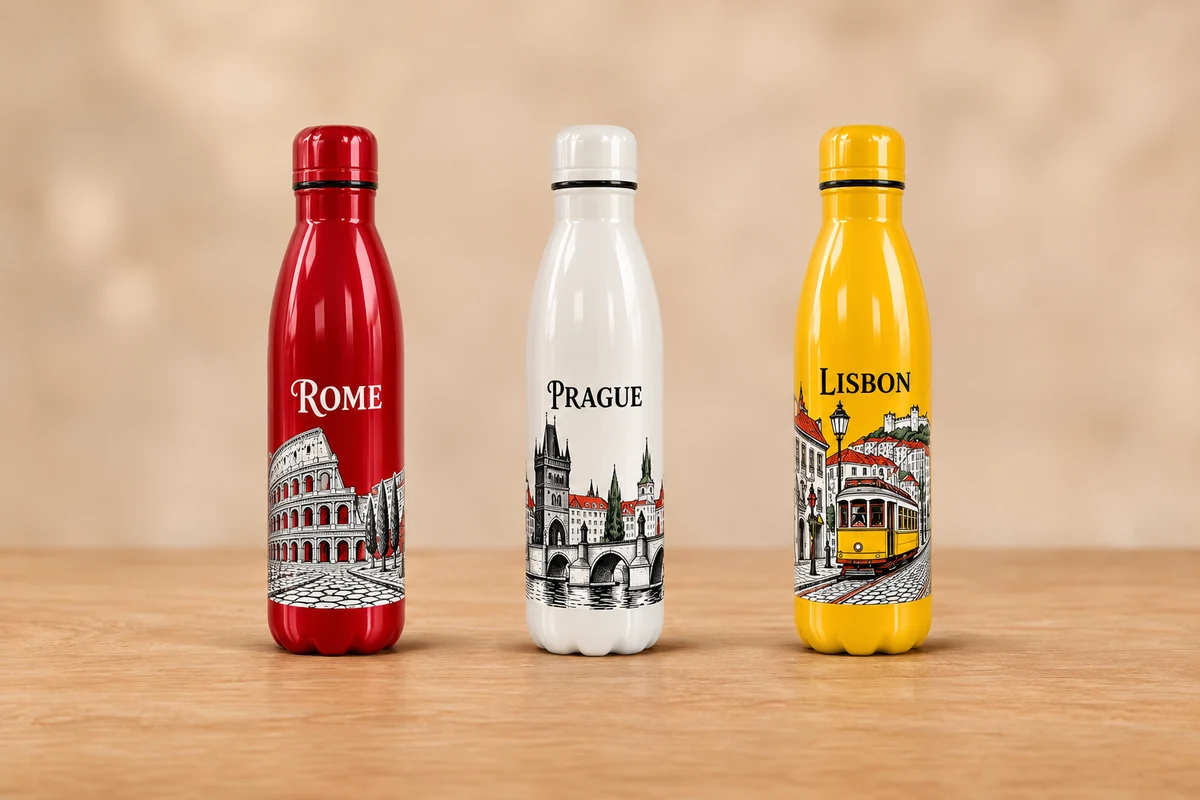
| Travel tumbler | Body, lid, artwork placement and intended use | Custom Souvenir Travel Tumblers |
Keep the product brief specific. “Mug” or “tumbler” alone does not define material, capacity, wall construction, lid, decoration or packing. The chosen model should be confirmed in a quotation and approved sample.
How should destination artwork change across sizes?
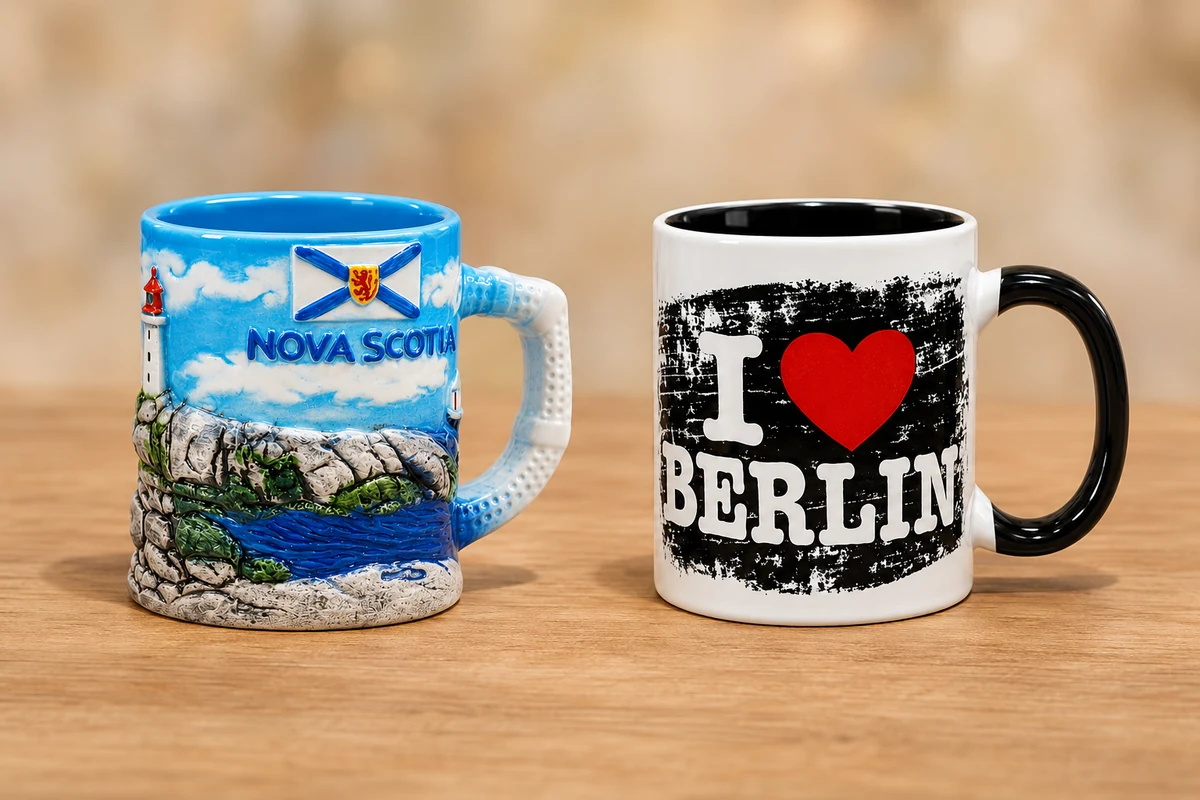
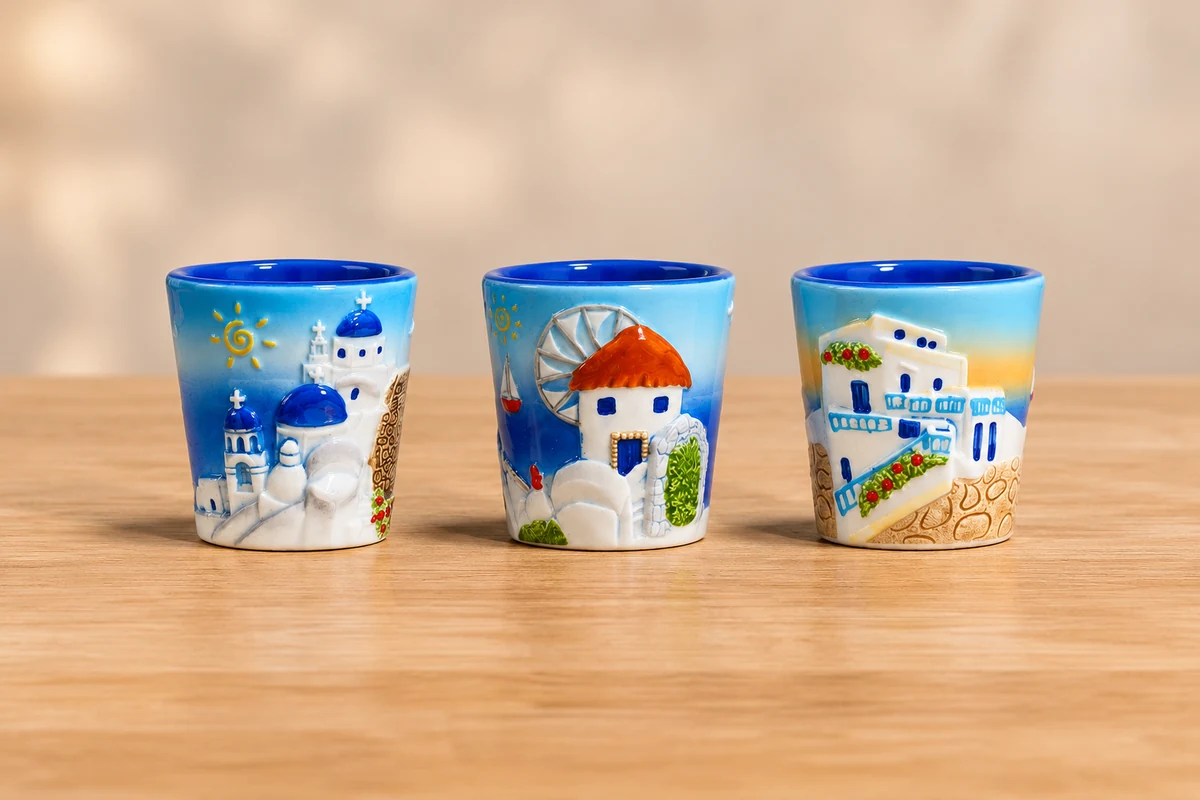
Choose a recognizable landmark, place name or attraction motif, then adapt it to each print area. A long place name that reads on a mug may not remain clear on a small shot glass. A travel tumbler may show artwork only on the front when arranged on a shelf. Request size-specific proofs rather than scaling the same file automatically.
Confirm the actual decoration method for each construction. Color, relief, print position and finishing can differ between ceramic, glass and metal-bodied travel products. A digital proof checks wording and layout; a physical sample checks the visible result on the chosen surface.
What should buyers verify for food-contact and care information?
Ask the supplier for the material specification and any food-contact documentation required by the destination market. Confirm whether the selected decoration and product are suitable for the intended drink, cleaning method and temperature range. Do not copy care or performance claims from one drinkware type to another. If a travel format must resist leaks or retain temperature, define the test conditions and acceptance criteria before relying on those claims.
How do MOQ and timelines affect a mixed drinkware range?
The current linked product pages use different commercial terms. The ceramic souvenir mug lists 500 pieces per design; the ceramic shot glass lists 1,200 pieces per design; the glass shot glass lists 1,000 pieces per design. The travel tumbler page says MOQ and timing are confirmed after the design and specifications are reviewed. Treat each as a separate line item. Do not assume that combined quantities across several formats satisfy a per-design minimum.
The ceramic mug and ceramic shot-glass pages list a 12–15-day sample reference and 25–30-day production reference. The glass shot-glass page lists 10–15 days for sample and 30–40 days for production. These are product-page planning figures; confirm the current quotation, approvals and shipping separately.
How should the range be packed and displayed?
A gift-shop assortment needs both transit protection and shelf presentation. Ask whether the products are individually boxed, sleeved or packed in protective partitions; specify barcodes, hang or shelf labels and carton marks if required. Plan the display by footprint and visual height, then check whether the packaging leaves the destination artwork visible.
What should a gift shop send for a drinkware quotation?
- The retail setting and proposed range of mugs, shot glasses and travel formats.
- Artwork for each destination and the number of design versions.
- Preferred size, capacity, material, color and decoration position for every item.
- Quantity per design, not only total collection quantity.
- Individual packaging, carton needs, destination market and required arrival date.
- Any food-contact, care, leak or thermal requirement that needs documented verification.
Browse the broader tourist souvenir range, the souvenir mug category and souvenir shot glasses to compare product routes. This guide helps define the collection; each product page handles its own exact model and quotation.
Quick answers for souvenir drinkware buyers
Should a gift shop carry both mugs and shot glasses?
They serve different shelf and price positions. Select the mix from your visitor profile, available shelf space and product-specific minimums.
Can one design be used on every drinkware format?
A shared destination theme can be adapted, but each format needs a size-specific artwork proof and sample review.
What is the MOQ for souvenir mugs and shot glasses?
The linked ceramic mug page lists 500 pieces per design, the ceramic shot glass 1,200, and the glass shot glass 1,000. Confirm current terms in the quotation.
Is the travel tumbler MOQ the same as the ceramic mug MOQ?
No shared MOQ is published. The travel tumbler page calls for confirmation after design and specifications are reviewed.
What should be checked on a sample?
Check material, capacity, visible artwork, color, edges, handle or lid, stability and packaging. Define any functional or food-contact evidence required for your market.
Can mixed products be packed as one set?
A mixed set may be planned, but specify each component, quantity, box structure and assembly responsibility before quoting.
Plan a Souvenir Drinkware Collection
Send your destination artwork, chosen formats, quantity per design, packing needs and delivery market for a product-specific quotation.