Choose branded drinkware by recipient use before selecting the logo method. An event handout, an employee welcome gift and a premium client set may call for different bodies, lids, handles and packing. A useful bulk brief compares the actual format, capacity, decoration area and quantity per design, then defines any functional or compliance requirement that must be verified.
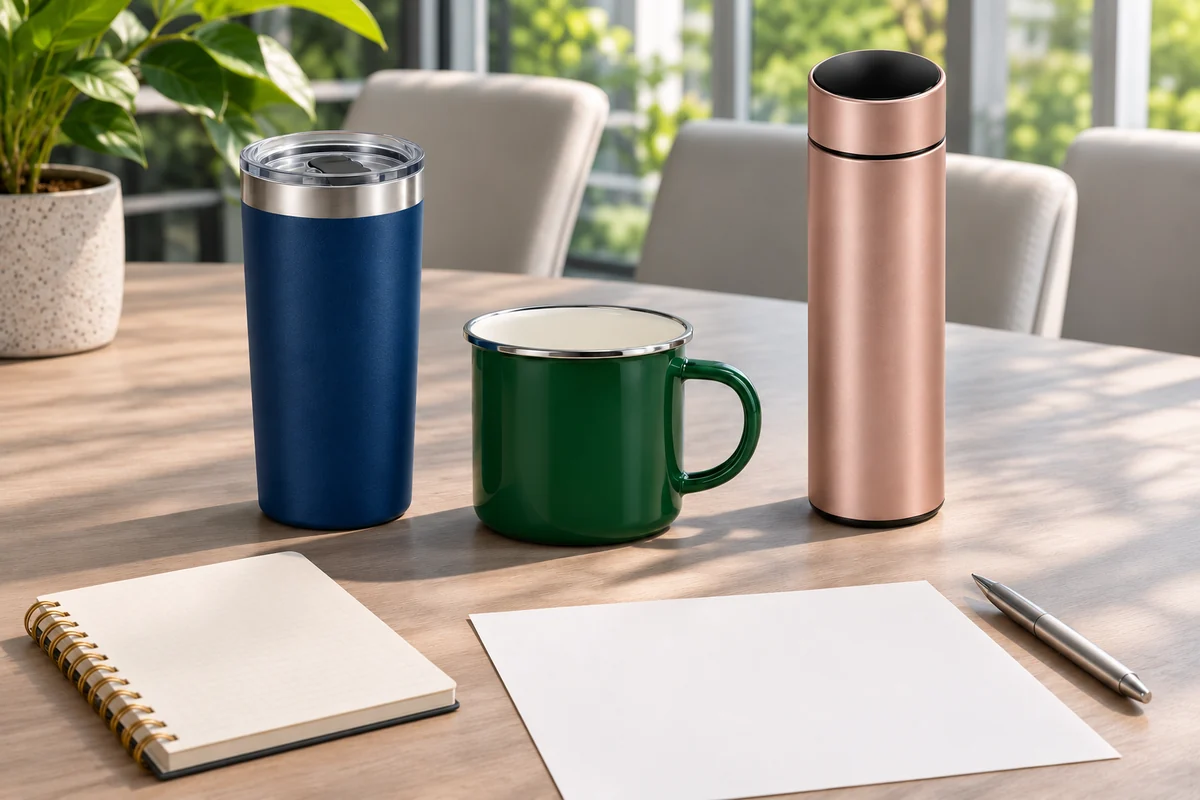
What job should the branded drinkware do?
For a conference, portability and simple distribution may lead the brief. For a desk gift, a handled mug may be more appropriate. For a travel or outdoor program, buyers may prioritize a closed container. Write down recipient, intended beverage, distribution setting and target retail or gifting position so the format has a practical role.
| Format | Best question to settle first | Product option |
|---|---|---|
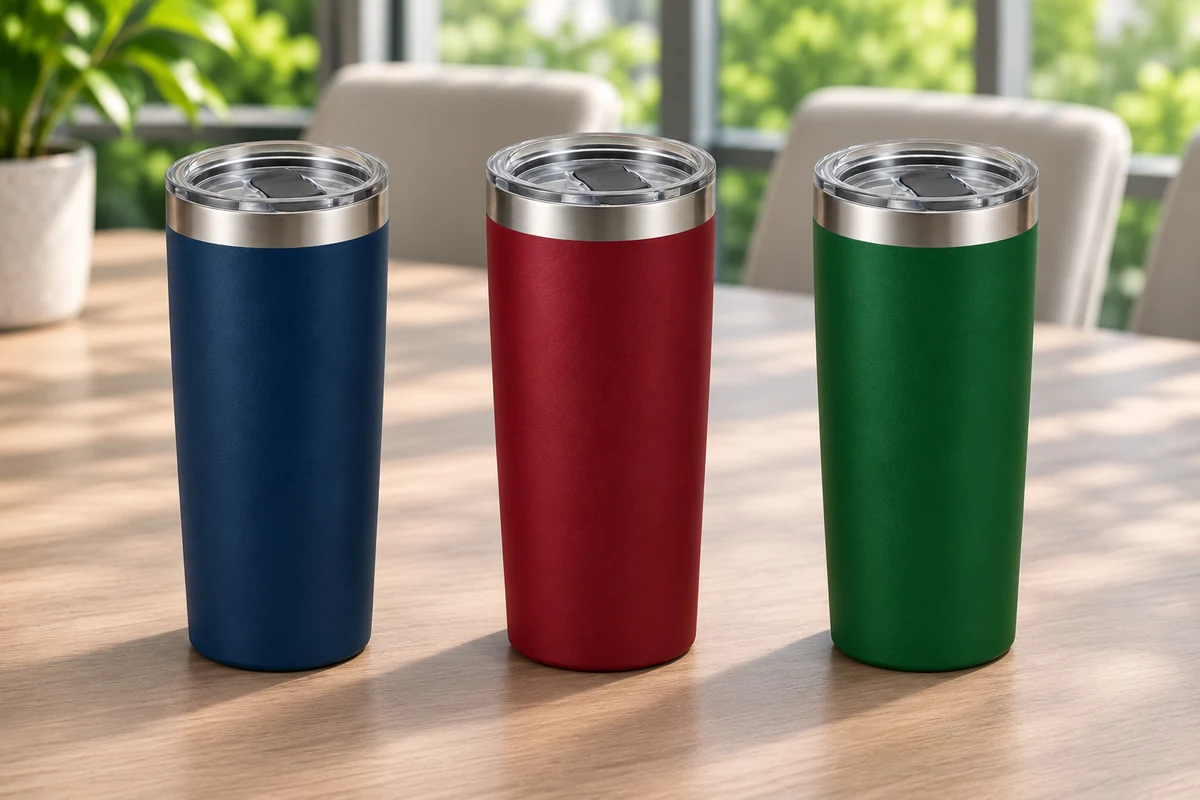
| Stainless travel tumbler | What capacity, lid and available logo area fit the program? | Custom 20oz Promotional Tumblers |
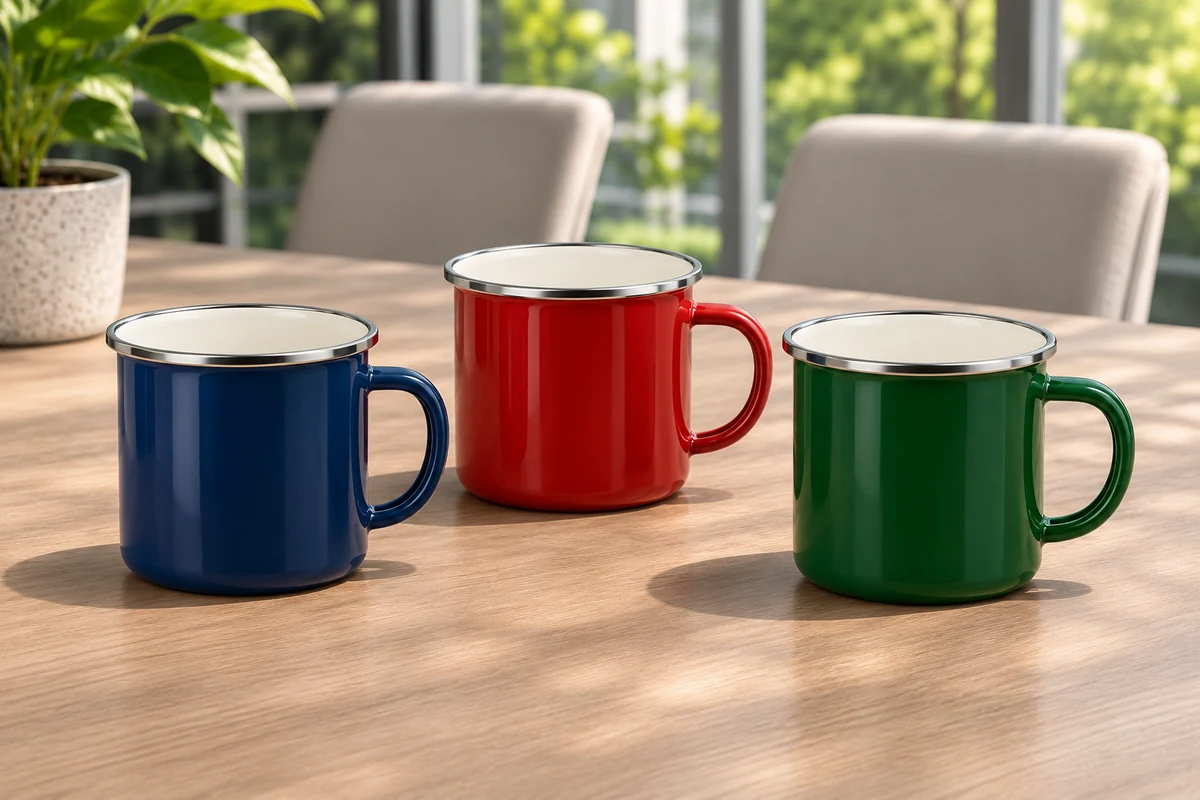
| Enamel mug | Does the handle, finish and decoration suit the intended setting? | Custom Promotional Enamel Mugs |
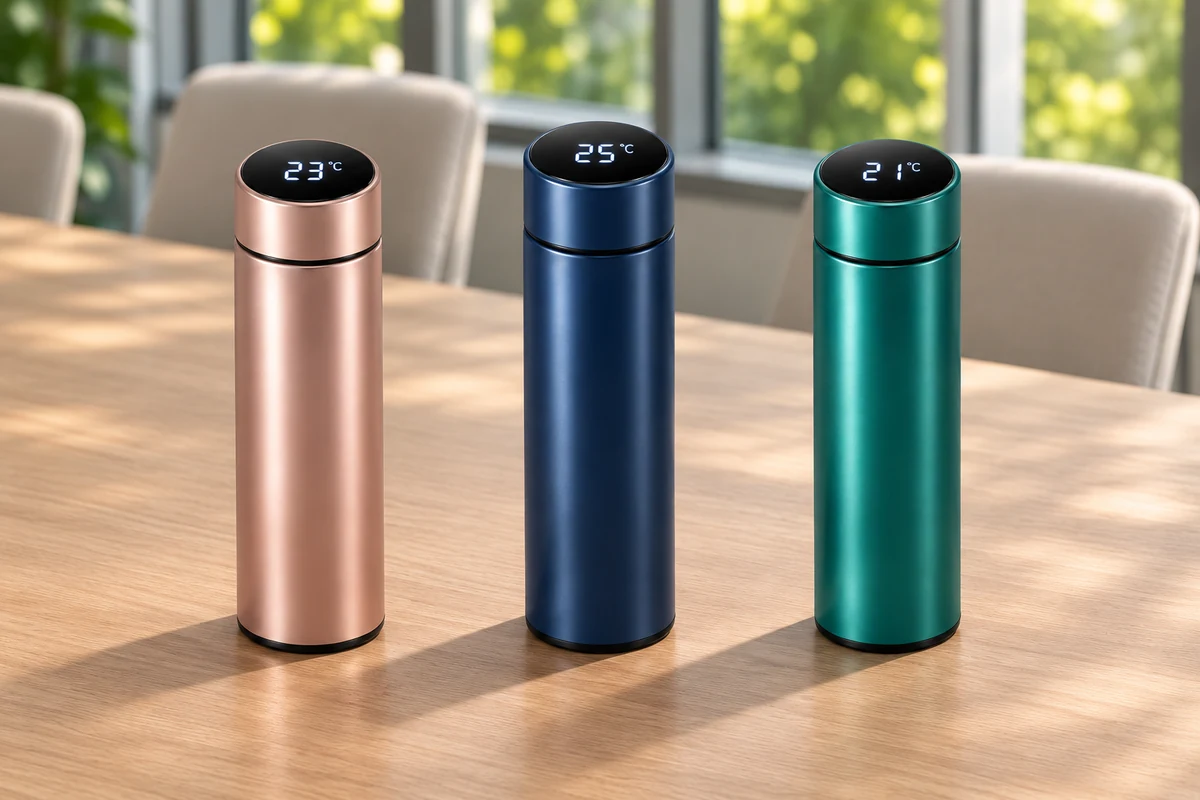
| Smart thermos bottle | Which display, lid and body configuration is actually quoted? | Custom Smart Temperature Display Thermos Bottles |
| Large water bottle | How will capacity, carry method and logo size affect use? | Promotional 1L Straw Water Bottles |
A product name is a starting point, not a complete specification. Confirm wall construction, surface finish, lid or straw components, color, individual packing and the actual logo area for the selected model.
How should you choose the decoration method and logo area?
Start with the approved brand file and intended logo size. A curved body, handle or seam can limit placement. Ask for a marked print or engraving area on the exact product and specify one-sided, two-sided or wraparound artwork as separate requirements. Check small text, multicolor artwork and surface contrast on a physical sample.
If the order contains several body colors, list artwork contrast for each one. Do not assume that one proof establishes the appearance on all finishes. Keep artwork approval separate from any performance or food-contact review.
What should be checked on the pre-production sample?
- Finished capacity, dimensions, weight and general handling.
- Lid fit, closure, straw, handle or display function where applicable.
- Logo size, position, color and legibility on the actual surface.
- Visible finish, edges, component assembly and individual packing.
- Any agreed leak, thermal, electrical or food-contact test and its acceptance conditions.
The presence of a lid or temperature display does not by itself prove leak resistance, thermal performance or electrical compliance. Define the destination market and required documentation with the supplier before placing a performance claim in campaign materials.
How should MOQ and lead time be planned?
The linked 20oz tumbler, promotional enamel mug, smart thermos and 1L straw-bottle pages each currently list 500 pieces per design. Their product pages show a 10–15-day sample reference after artwork approval and a 30–35-day bulk production reference after sample or artwork approval. These are planning figures for those named products, not a promise for every drinkware model. Confirm current pricing, approvals, timing and shipping in the quotation.
For a mixed gift program, calculate each product and colorway separately. A campaign total across mugs, bottles and tumblers does not automatically meet a per-design minimum. If the arrival date is fixed, work backward through artwork, sample delivery, approval, bulk production, inspection and transport.
How do you compare quotations and packing fairly?
Use one line-item specification for each format: capacity, material, color, lid, logo method, print positions, quantity and packing. State whether each item needs a gift box, sleeve, name card or carton partition. Compare setup charges and shipping terms alongside unit price. A lower unit price with different lid or packing is not the same offer.
What belongs in a branded drinkware RFQ?
- Recipient and campaign use, destination market and required arrival date.
- Preferred product format, capacity, color and component configuration.
- Logo file, colors, size, placement and number of artwork versions.
- Quantity per product, color and design.
- Individual packaging and any mixed-kit assembly needs.
- Any required food-contact, electrical, leak or thermal evidence and the agreed test criteria.
Browse the promotional drinkware category for other starting points. This guide helps select and specify a format; each product page supports its own model-specific inquiry.
Quick answers for branded drinkware buyers
Which drinkware format is best for a corporate event?
Match the format to recipient use, distribution, budget and packing. A handled enamel mug, travel tumbler and bottle serve different purposes.
Can a logo wrap around every cup or bottle?
No universal print area is published. Request the available decoration area and a proof for the selected model.
What is the MOQ for the linked drinkware products?
The four linked product pages currently list 500 pieces per design. Confirm the selected product, colorway and artwork version in the quotation.
How long do samples and bulk production take?
The four linked pages show 10–15 days for samples after artwork approval and 30–35 days for bulk production after sample or artwork approval. Shipping is additional.
Do lids prove a tumbler is leakproof?
No. If leak resistance matters, define the test orientation, duration and acceptance criteria for the selected lid and body.
What compliance information should I request?
State the destination market and intended use, then ask which food-contact or electrical documents apply to the exact product and configuration.
Choose Drinkware for Your Brand Campaign
Send the recipient use, format, capacity, logo artwork, quantity per design, packing and destination market for a product-specific quotation.