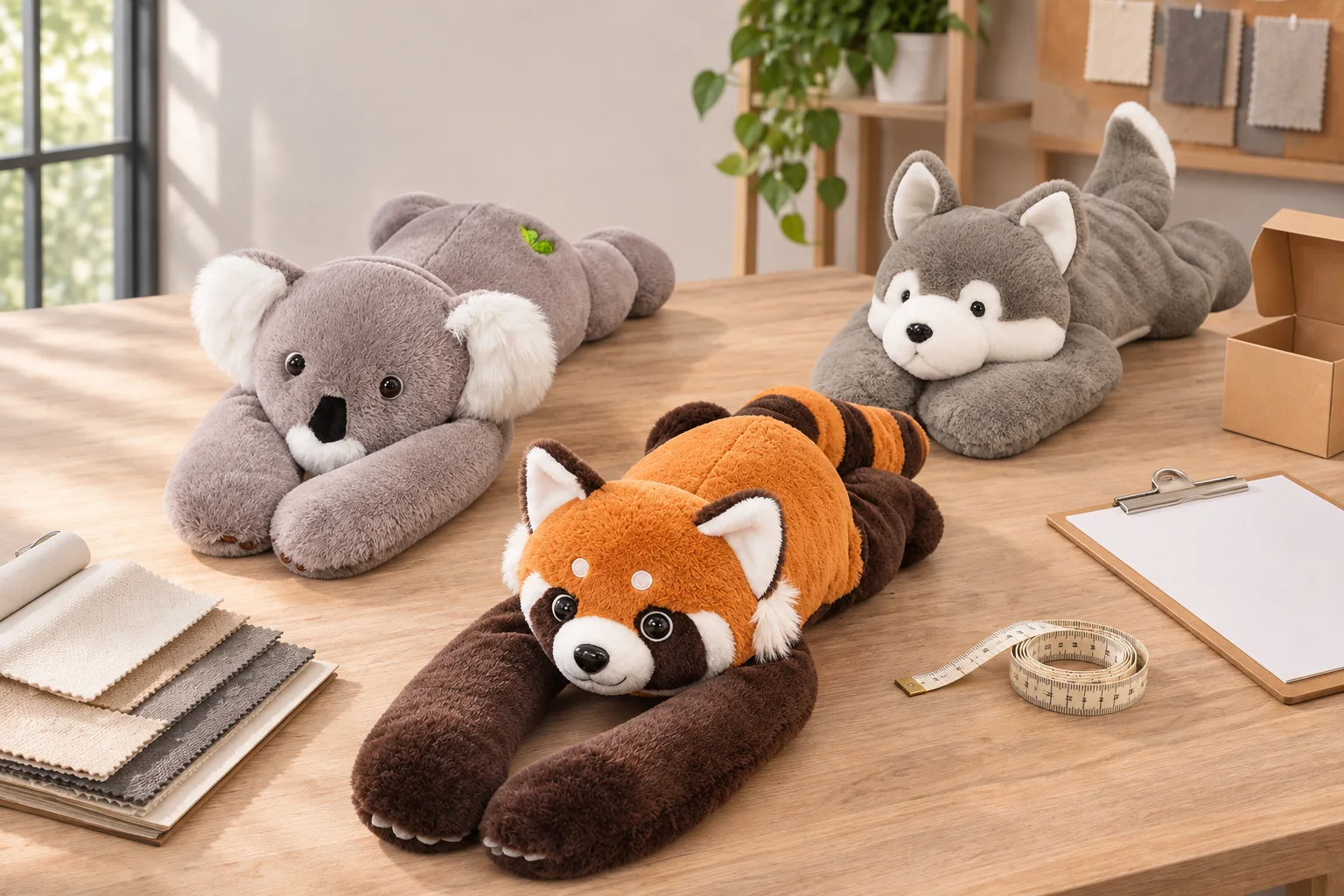
A custom weighted plush brief should define the intended user and market, finished size and total weight, filling choice, inner-pouch structure, weight placement, cleaning target, packaging and testing scope. The physical sample should then confirm appearance, balance, construction and the final specification before bulk production.
What to include in the first weighted plush brief
- Intended use, target user and destination market
- Reference artwork, animal pose and realistic or stylized appearance
- Measurement basis, finished dimensions and target total weight
- Glass beads or plastic pellets, plus the required weight-placement area
- Inner-pouch, fixation and cleaning requirements
- Packaging, testing and delivery requirements
Buyers often begin with a visual concept—such as a seated cat, a lying red panda or a realistic animal—and a target weight. A manufacturable brief needs more detail. The steps below help turn that concept into a sample that can be measured, reviewed and approved.
1. Define the intended user, market and product role
There is no single positioning that fits every weighted plush project. The same construction idea may be developed for a retail plush collection, a gift programme or another use case. Start by stating who will use the product, the intended age group, the sales market and how it will be presented. These facts influence material selection, construction, labels and the testing plan.
A buyer brief should describe the intended use without making unsupported medical, therapeutic or safety claims. Any claims and required test standards must be reviewed against the final product and destination market.
2. Specify finished size and finished weight separately
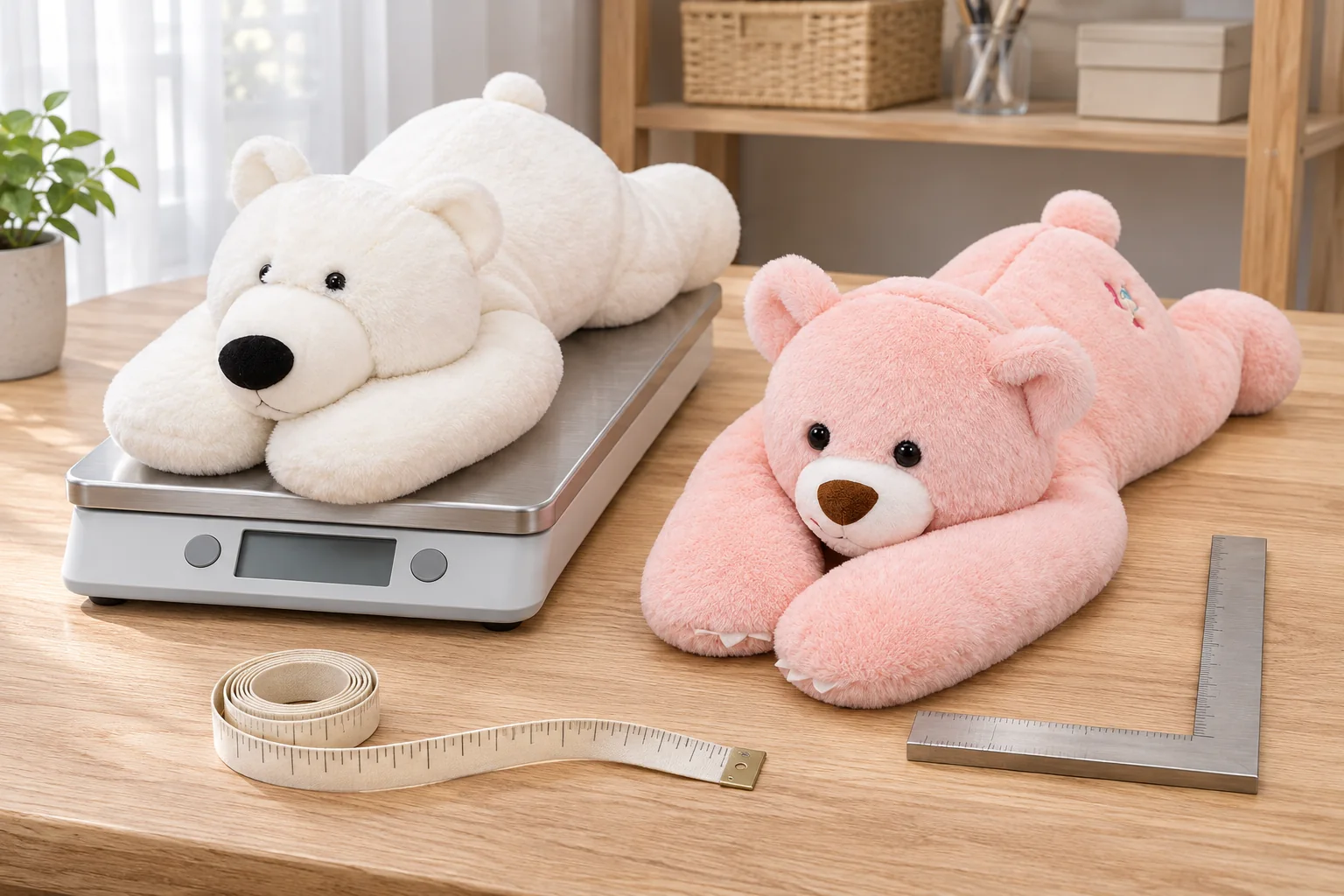
A statement such as “35 cm” is incomplete unless the measurement basis is clear. For a seated animal, it may mean overall height. For a lying animal, it may mean head-to-foot total length. Mark the start and end points on a drawing or reference photo.
The target weight should be written as the finished total product weight. A finished weight of approximately 1.0–1.5 kg can be developed for suitable designs, but the shell, stuffing and weighted fill must be balanced around the size, pose and required hand feel. Do not assume one fixed unweighted shell weight for every design.
3. Choose glass beads or plastic pellets
Weighted plush filling commonly uses either glass beads or plastic pellets. These materials are normally treated as alternatives rather than blended by default. The final selection should reflect target weight, available internal volume, feel, sound, cleaning expectations, documentation and destination-market requirements.
| Review point | Glass beads | Plastic pellets |
|---|---|---|
| Density and internal volume | Higher density may achieve a target weight in less volume. | Lower density may require more volume for the same added weight. |
| Feel and movement | Can create a compact, flowing weighted feel depending on bead size and pouch design. | Can create a lighter-volume feel depending on pellet shape, size and pouch design. |
| Material confirmation | Confirm bead specification and supporting documents for the project. | Confirm the exact polymer and supporting documents; “poly pellets” is not a complete material specification. |
| Construction | Both require a suitable sewn inner pouch, seam construction and sample verification. | |

Important: do not select a filler only from a generic material name. Ask the supplier to confirm the exact specification used in the approved sample and keep that information in the bill of materials.
4. Plan weight placement around the product pose
Weight placement changes how a plush animal sits, lies and feels when lifted. For a prone or lying animal, the main weighted area is often in the central body below the neck and above the legs. For a seated design, the main weighted area is often concentrated around the seat or lower body.
These are development starting points, not universal rules. The physical sample should confirm centre of gravity, balance, visible deformation and whether the product returns to its intended pose after handling.
5. Confirm the inner pouch, fixation and cleaning access
The weighted fill is normally contained in a sewn inner pouch before being placed inside the plush body. The pouch may be fixed to an internal position or placed in a sewn fabric compartment, depending on the design and buyer requirement. A loose, unspecified bag inside the body should not be treated as an approved construction detail.
If cleaning access is required, one practical option is a zippered, removable outer plush cover—similar to removing a duvet cover—while the weighted inner component remains separate. Whole-product washability should not be promised unless the approved materials and construction have been evaluated for that cleaning method.
6. Prepare appearance and reference materials
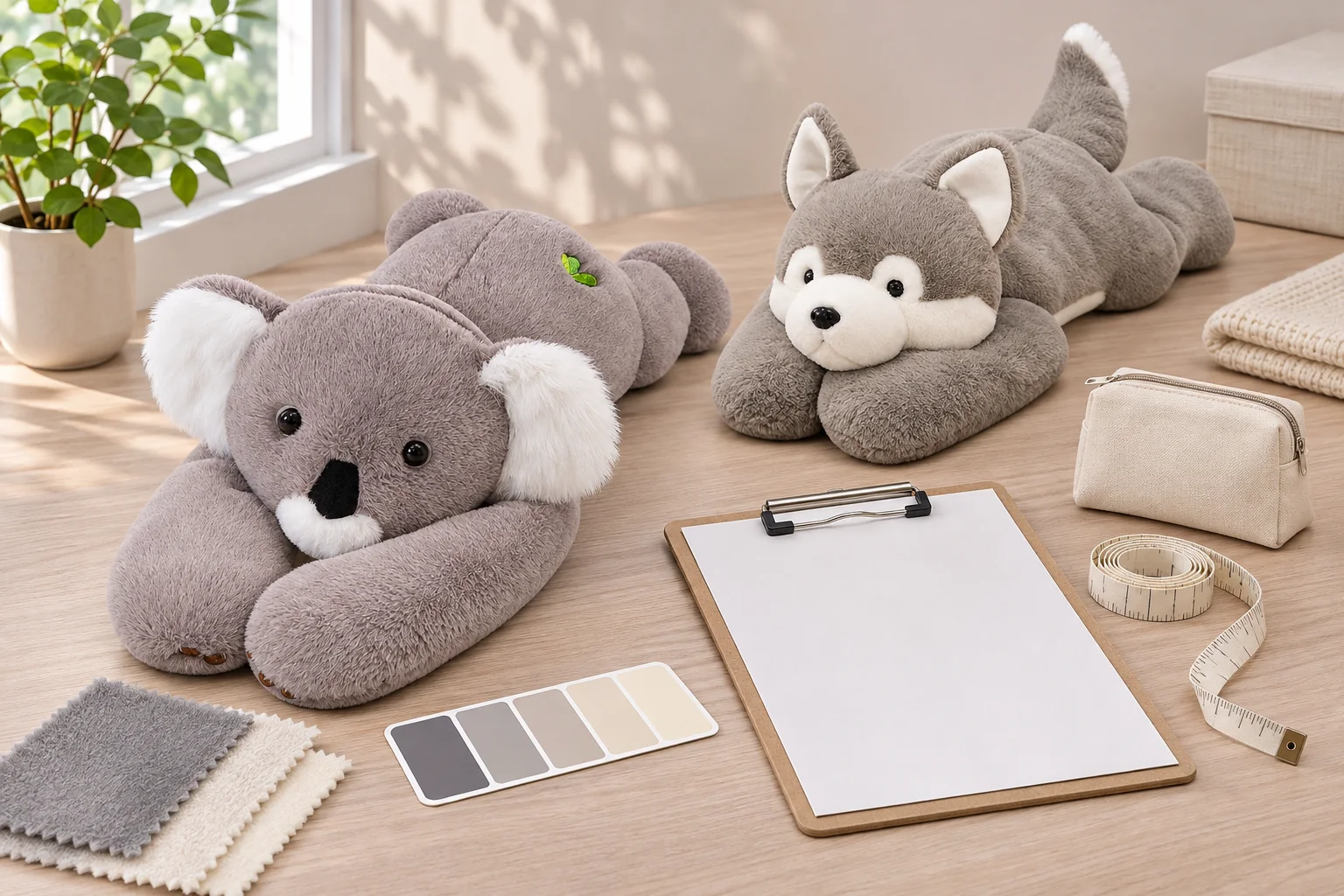
For realistic animals, the brief should cover coat colours, pile length, fur direction, facial proportions, ear shape, eye style, markings and pose. Provide front, side and rear references when possible. For natural coat patterns, identify which markings must stay consistent and which may vary slightly during production.
If realism is central to the project, review our approach to realistic plush animal development and send clear visual references with your inquiry.
7. Review the physical sample before approval
A photo can confirm general appearance, but it cannot fully confirm balance, weight distribution, pouch movement or hand feel. The buyer’s weighted plush sample checklist should include:
- Finished dimensions and the exact measurement direction
- Total finished weight and agreed tolerance
- Pose, balance and centre of gravity
- Filling material and fill weight
- Inner-pouch location, fixation method and seam condition
- Fur, colour, embroidery, face and other appearance details
- Cleaning construction and care-label wording
- Packaging fit and presentation
- Final testing scope for the destination market
8. Confirm MOQ, sample cost, timing and packaging
Commercial terms depend on design complexity and materials. For current custom weighted plush projects, the working reference is:
| MOQ | 1,000 pieces per design |
|---|---|
| Custom sample fee | From USD 200 per design; final cost depends on the design and development work |
| Sample lead time | Approximately 15–20 days after details are confirmed |
| Production lead time | Approximately 40–50 days after sample approval and material confirmation |
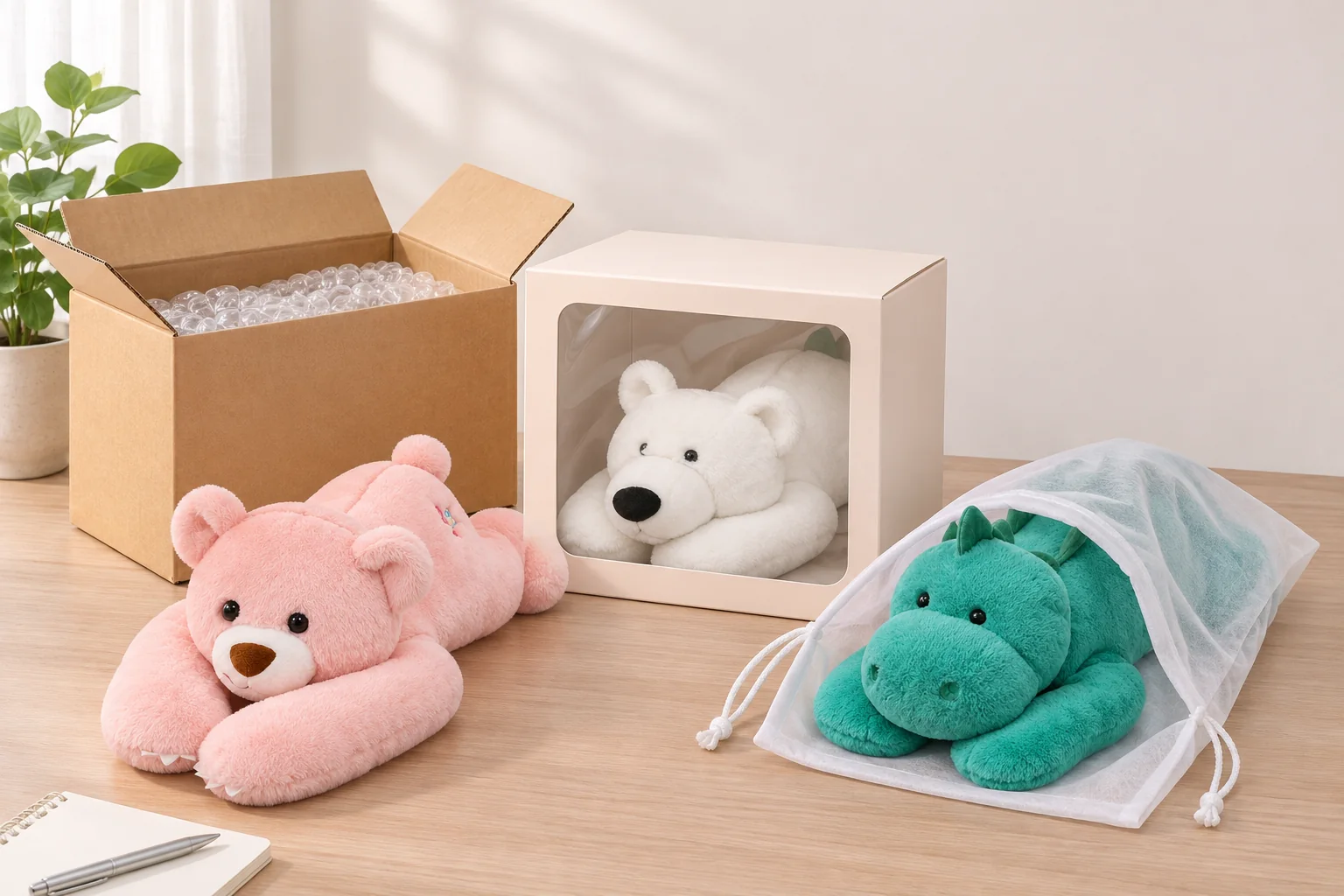
| Packaging | Neutral packing, custom colour box or other project-specific packaging |
9. Confirm testing for the final weighted version
Existing plush-toy reports can provide useful background evidence for materials or construction experience, but they do not automatically cover every new weighted product. Adding weighted fill, an inner pouch, a zipper or a different intended age group can change the final assessment.
The testing plan should therefore be based on the approved weighted sample, complete bill of materials, intended user, product claims and destination market. Buyers can review our custom plush compliance process and available plush testing and compliance support, then confirm the project-specific scope before production.
Copy-and-send weighted plush buyer’s brief
- Product: animal, pose and intended use
- Market: destination country/region and intended age group
- Size: measurement value plus overall height or total length
- Finished weight: target total weight and acceptable tolerance
- Filling: glass beads or plastic pellets; request exact material confirmation
- Weight placement: central body, seat/lower body or another defined zone
- Construction: inner-pouch and fixation preference
- Cleaning: removable cover or other required method
- Appearance: artwork, references, coat, markings and facial details
- Packaging and testing: retail pack, shipping pack and destination-market requirements
- Quantity and delivery: pieces per design and required delivery date
Frequently asked questions
What information is needed to quote a custom weighted plush project?
Send the intended use and market, design references, finished dimensions, total target weight, filling preference, quantity per design, packaging and testing requirements. A complete brief reduces assumptions during sampling.
Are glass beads or plastic pellets better for weighted plush?
Neither is universally better. Glass beads are denser, while plastic pellets normally require more internal volume for the same added weight. The approved choice should consider feel, volume, pouch construction, exact material documents, cleaning target and market requirements.
Where should the weight be placed?
For lying designs, the main weight is often placed in the central body. For seated designs, it is often concentrated in the seat or lower body. The final position should be verified through sample balance and handling.
Can a weighted plush animal be washed?
Cleaning depends on its materials and construction. If cleaning access is required, a removable outer cover may be developed. Do not assume the complete weighted product is machine washable without project-specific evaluation.
What are the MOQ, sample cost and lead time?
The current working reference is 1,000 pieces per design, a custom sample fee from USD 200 per design, about 15–20 days for sampling and about 40–50 days for production after approval and material confirmation.
Does an existing EN 71 report automatically cover a new weighted version?
No. Existing reports may support a project review, but the final weighted version must be assessed against its actual materials, inner pouch, construction, intended user, claims and target market.
Product specifications: Review our weighted stuffed animal project specifications for the current customization scope, MOQ, sample timing and production reference before requesting a quotation.
Ready to Develop Your Custom Weighted Plush?
Send your animal reference, target size and finished weight, quantity per design, intended market and packaging needs. We can review the brief before sampling and quotation.