
Most custom resin snow globes combine a clear glass sphere with a molded polyresin internal scene and base, hand-applied paint, an approved liquid or dry decorative effect, a closure system and fitted packaging. Production usually moves through artwork review, 3D modeling, tooling, resin casting, hand painting, globe assembly, physical sample approval and bulk quality control.
This guide explains how custom resin snow globes and polyresin snow globe souvenirs move from a buyer brief to 3D development, molding, painting, globe assembly, sampling and mass production. Buyers comparing other constructions can begin with our complete custom snow globe sourcing guide. Current references are available on the custom resin and polyresin snow globes page and the glass souvenir snow globe product page.
What Are Custom Resin Snow Globes Made Of?
The finished product is a multi-material assembly rather than a single piece of resin. In this product family, “resin snow globe,” “polyresin snow globe” and “glass snow globe” may describe different visible parts of the same construction. A useful quotation identifies every component instead of relying on one material name.
| Component | Typical Construction in This Product Family | What the Buyer Should Confirm |
|---|---|---|
| Transparent globe | Clear glass sphere | Diameter, clarity, exterior condition and fit with the base |
| Internal miniature | Molded polyresin | Landmark proportions, viewing angle, paint and clearance |
| Decorative base | Molded polyresin with hand-painted or approved surface detail | Shape, wording, colors, stability and front orientation |
| Internal effect | Approved snow, glitter, liquid or dry decorative system | Appearance, movement and compatibility with the selected structure |
| Closure and assembly | Project-specific sealing and connection system | Orientation, cleanliness, security and agreed inspection method |
| Protective packaging | Fitted protection with the approved individual and export packing | Product movement, pressure points, retail presentation and carton arrangement |
The exact liquid, closure and packaging specifications must be confirmed for the selected design and destination market. A visually similar product is not evidence that every component or test requirement is identical.
Common globe diameter options include 45 mm, 50 mm, 55 mm, 60 mm and 65 mm. The selected diameter affects miniature detail, base footprint, weight, packing and cost.
Quick Answer: How Are Resin Snow Globes Made?
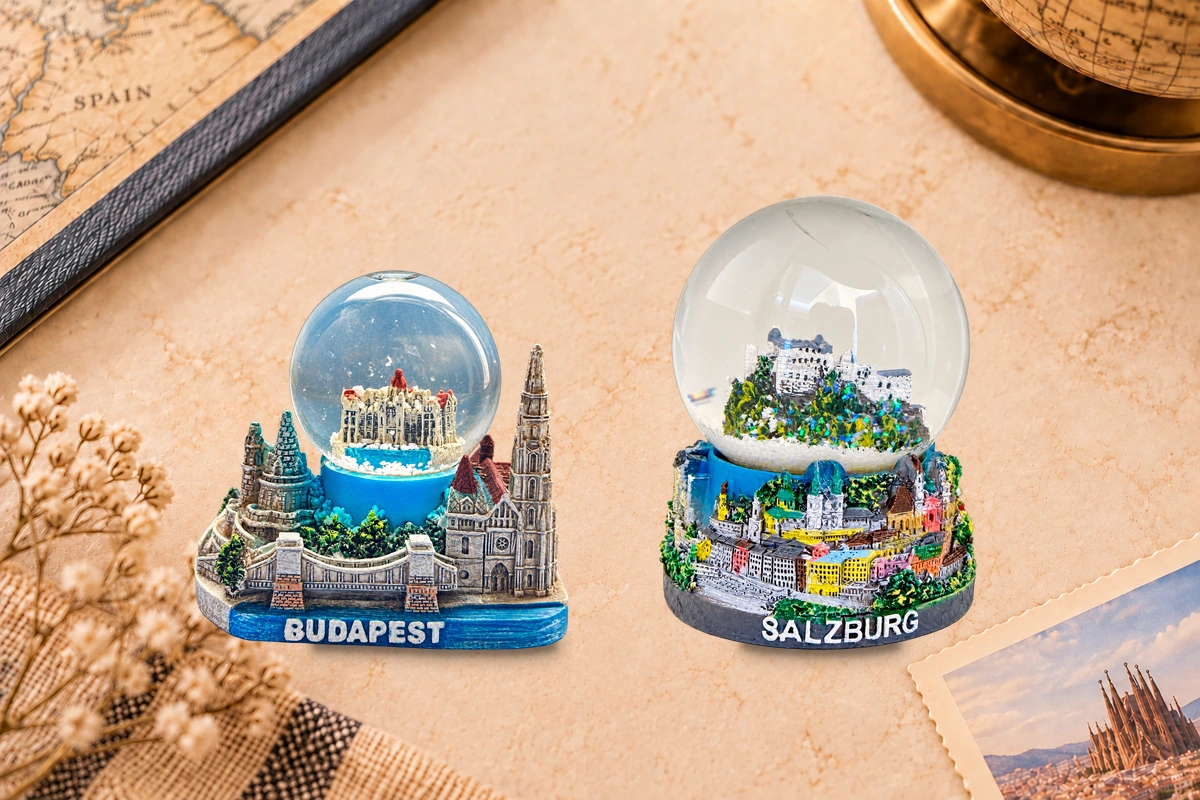
A typical project follows eight controlled stages: design brief, 2D artwork review, 3D sculpting, master approval, mold making, resin casting and finishing, hand painting and globe assembly, followed by sample approval and bulk production. The exact route depends on whether the design uses an existing structure or a completely new landmark and base.
Buyers also commonly search for this product as a glass snow globe. In this sourcing context, glass snow globe and resin or polyresin snow globe usually describe the same finished product family: a glass water-filled globe assembled with a molded resin or polyresin scene and base. The terms emphasize different visible components rather than a separate souvenir category.
- Define the destination, size, quantity, base shape and packaging.
- Prepare landmark references and exact wording.
- Convert the approved concept into a manufacturable 3D sculpture.
- Approve the master model and create the production mold.
- Cast, cure, trim and prepare the polyresin components.
- Apply primer, color, hand-painted details and protective finish.
- Assemble the glass globe, internal scene, decorative effect and resin base.
- Approve a physical sample before the 45-50 day reference production period begins.
1. Start with a Complete Buyer Brief
The factory needs more than a city name. A useful brief identifies the destination story, target retail channel, required quantity per design, overall height or globe diameter, preferred base style, internal landmark, exact city wording, color direction, packaging and delivery market. A museum shop may prioritize architectural accuracy, while a general gift shop may prefer brighter color and a simpler silhouette.
Terms such as snow globe, snowglobe, water globe, water ball and snow globe water ball may describe related products in different markets. They do not replace a complete material specification. Confirm whether the design uses a glass sphere, liquid or dry effect, internal resin miniature and molded polyresin base.
2. Convert 2D References into a 3D Design
The design team studies front, side and detail references, then simplifies the landmark so it remains recognizable at souvenir scale. Thin towers may need reinforcement, deep undercuts may need adjustment and very small windows may become raised or painted details. The goal is not to remove identity; it is to translate the identity into a stable, repeatable manufactured form.
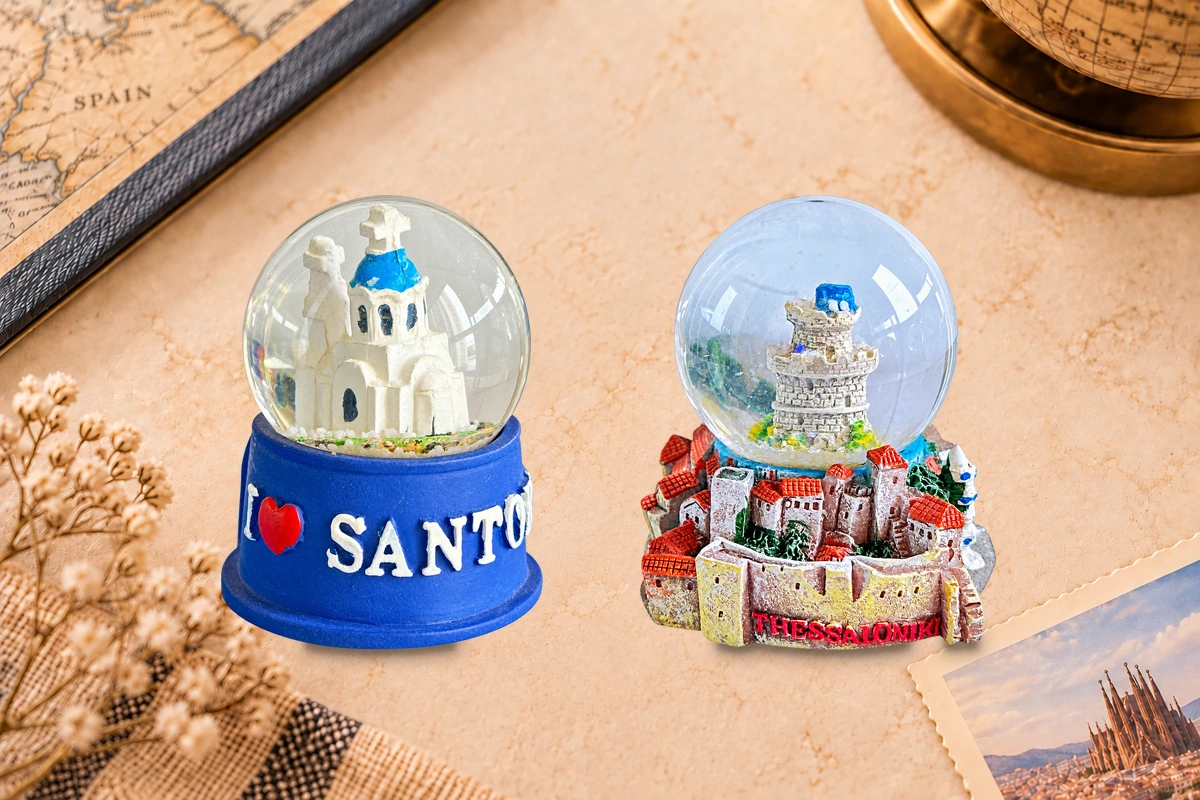
A digital 3D model or sculpted master should show the main viewing angle, landmark proportions, base lettering and the relationship between the internal scene and external base. For a detailed discussion of files, see our forthcoming artwork guide after publication; meanwhile, buyers can review the broader polyresin souvenir material guide.
3. Approve the Master Before Mold Making
The master establishes the physical shape that later pieces must follow. Buyers should review the silhouette, height, thickness, base stability, landmark relationship, readable wording and any fragile projections. Changes are easier before the production mold is made. Once tooling begins, major structural revisions can require a new master or mold.
4. Make the Mold and Cast the Resin Components
After master approval, the supplier prepares a mold suitable for the chosen component. Polyresin is cast, cured and removed from the mold. Each casting is trimmed and cleaned before surface preparation. Inspection at this stage looks for bubbles, incomplete edges, distortion, cracks and unstable contact surfaces.
The internal miniature and external base may be separate parts because they serve different visual and assembly functions. The base often carries city lettering and supporting architecture, while the internal sculpture provides one clear focal point inside the globe.
5. Prime, Paint and Finish the Polyresin
Surface preparation affects the final appearance. Castings are cleaned and, where required, sanded or primed before color application. Larger color areas may be sprayed, while windows, signs, roof lines, flags and relief details are commonly finished by hand. An approved color reference helps control variation across a large order.
A resin snow globe gift may use bright destination colors, restrained museum tones, antique metallic finishes or winter decoration. The finish must match the approved sample rather than an unverified screen image.
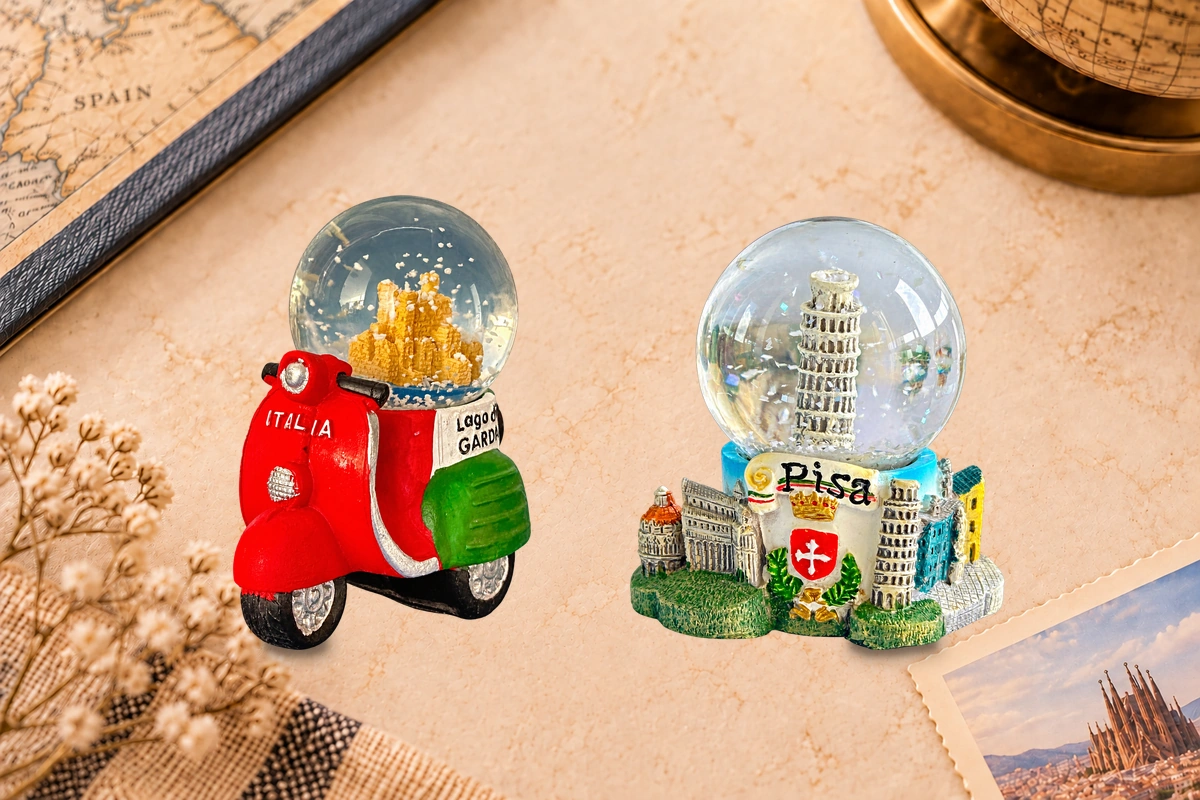
6. Assemble the Globe, Internal Scene and Base
Assembly combines the approved miniature, transparent globe, decorative snow or glitter effect, closure system and finished base. The supplier checks orientation so the landmark faces the intended front and the city name remains aligned. The structure must also remain stable when placed on a shelf.
Liquid formulation, sealing method and component compatibility are technical specifications that must be confirmed for the actual project. Buyers should avoid assuming that every water snow globe or resin water globe uses the same liquid, glitter or closure system.
7. Approve a Physical Sample
A rendering cannot prove clarity, real color, snow movement, weight, stability, sealing or packaging fit. The physical sample should be checked from the front, side and top, then compared with the approved artwork and measurements. Our standard Blog planning reference is approximately 20-25 days for sampling after the necessary design and specifications are confirmed, subject to complexity and revisions.
- Confirm the exact destination spelling and logo position.
- Check the landmark silhouette and scale inside the globe.
- Review paint coverage, fine details and color consistency.
- Check globe clarity, decorative movement and exterior cleanliness.
- Confirm base stability, front orientation and total dimensions.
- Approve the individual box, insert and export-carton arrangement.
8. Control Mass Production Against the Approved Sample
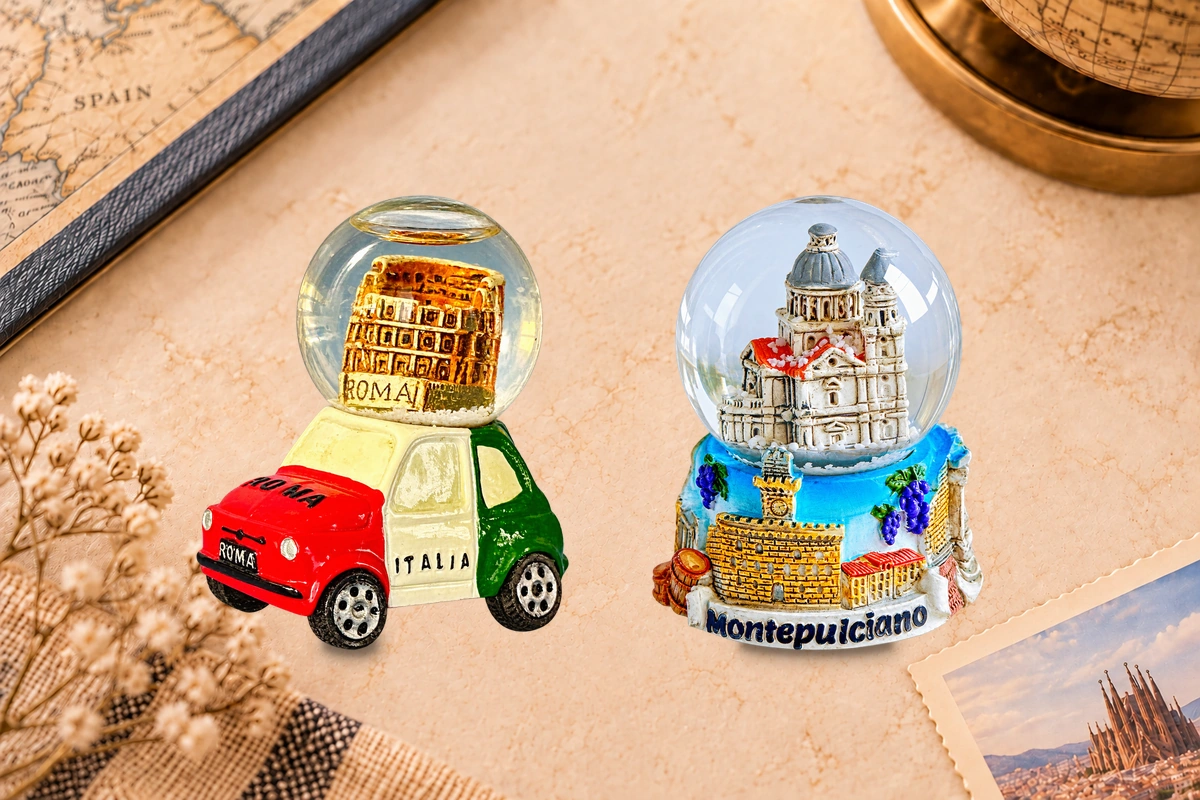
The approved sample becomes the practical quality reference for molding, painting, assembly and packing. Production planning should separate quantity by design and maintain traceability for mixed-city orders. The current product reference is 45-50 days for production after sample, order details and deposit approval, although the actual schedule depends on quantity, design count, painting workload, packaging and factory capacity.
What Information Is Needed for a Factory Quotation?
| Quotation Input | What to Provide |
|---|---|
| Design | Destination, landmark, reference photographs, exact wording and logo files |
| Specification | Overall height, globe diameter, base material and decorative effect |
| Order | Quantity per design and number of designs |
| Finish | Color direction, hand-painted detail and surface expectations |
| Packaging | Plain box, printed box, window box, gift box or other verified structure |
| Delivery | Country, postal code, target date and preferred shipping term |
Final Recommendation
Treat the internal sculpture and base as manufactured components, not as decoration added at the end. When evaluating a custom snow globe manufacturer, factory or supplier from China, ask who manages 3D development, tooling, painting, assembly, inspection and export packaging. Approve structure before tooling, approve color and assembly on a physical sample, and control the wholesale bulk order against that sample. Buyers can explore the wider custom snow globes category or discuss a project through the product page.
Frequently Asked Questions About Resin Snow Globe Production
What is a resin snow globe?
It normally describes a snow globe with a molded resin or polyresin base and often an internal resin miniature. The transparent sphere may still be glass, so buyers should confirm the complete construction.
Are glass snow globes, resin snow globes and polyresin snow globes the same product?
They commonly describe the same finished product family from different material angles: a glass water-filled globe assembled with a molded resin or polyresin scene and base. The supplier should still confirm the complete construction in the quotation.
Can a photograph be turned into a custom snow globe?
Yes. Clear front, side and detail references can be developed into a simplified 3D design, subject to technical review and sample approval.
Is a 3D file required before requesting a quotation?
Not always. A supplier can review photographs, drawings or vector artwork first, but a new sculpted project normally requires 3D development before tooling.
How long does a resin snow globe sample take?
The current product reference is normally 20-25 days after the necessary artwork and specifications are confirmed. Complex revisions may extend development.
How long does bulk production take?
The current product reference is normally 45-50 days after sample approval and order confirmation, subject to quantity, design count, finish and packaging.
Why must the master model be approved before mold making?
The master determines the manufactured shape. Major changes after tooling can require mold correction or replacement.
Can several city designs be produced in one order?
This may be possible, but MOQ, tooling, color standards and packaging normally need to be confirmed per design.
How is hand-painted consistency controlled?
Factories use an approved sample, color references, work instructions and staged inspection. Natural hand-painted variation should be defined and controlled within the agreed standard.
What should be included in the first inquiry?
Send the design references, exact wording, target size, quantity per design, required finish, packaging, delivery country and target date.
Custom Resin Snow Globe Production
Turn Your Destination Artwork into a Manufacturable Snow Globe
Share your landmark references, quantity, target size, packaging and delivery market. We can review the structure, design route and sampling requirements for a project-specific quotation.
Request a Custom Snow Globe Quote