
Choosing a material is one of the most important decisions in a custom souvenir fridge magnet project. Material affects how much detail the design can show, how the product feels in a customer’s hand, how safely it can be shipped, and where it fits within a gift shop’s retail price range.
A colorful beach illustration, a miniature historic building and a premium museum emblem should not automatically use the same production method. Each design needs a material that supports its artwork, target customer, packaging and commercial position.
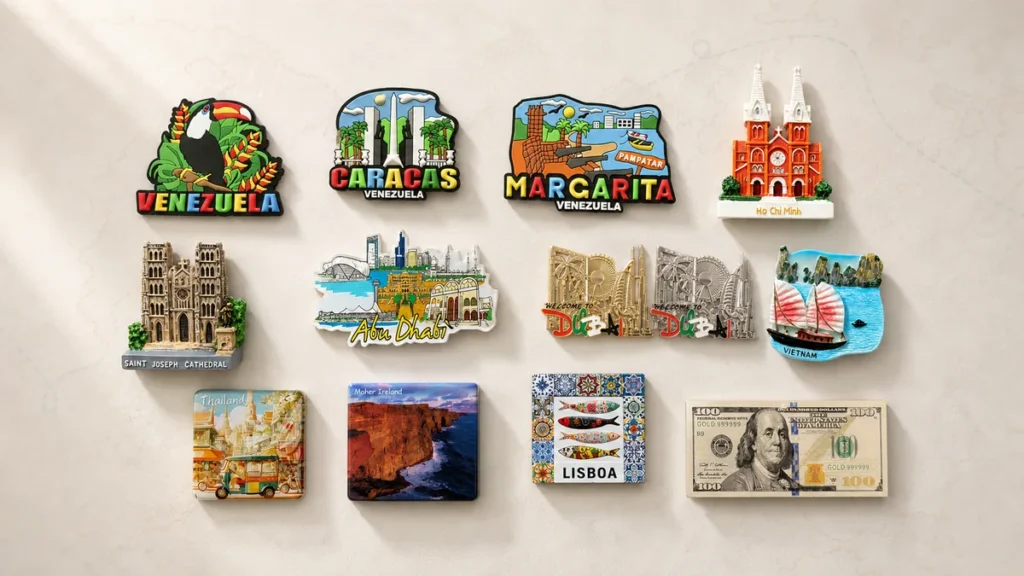
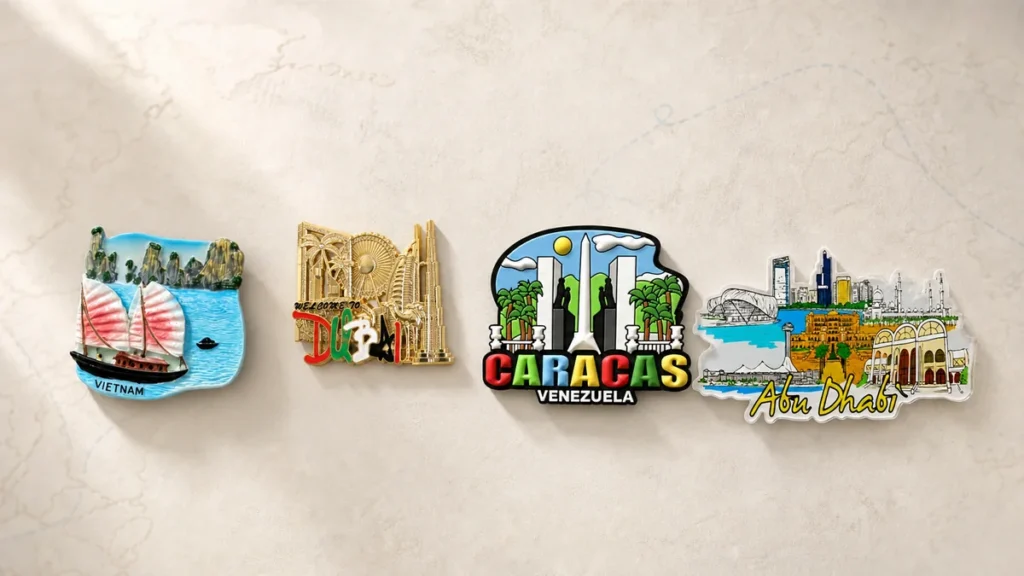
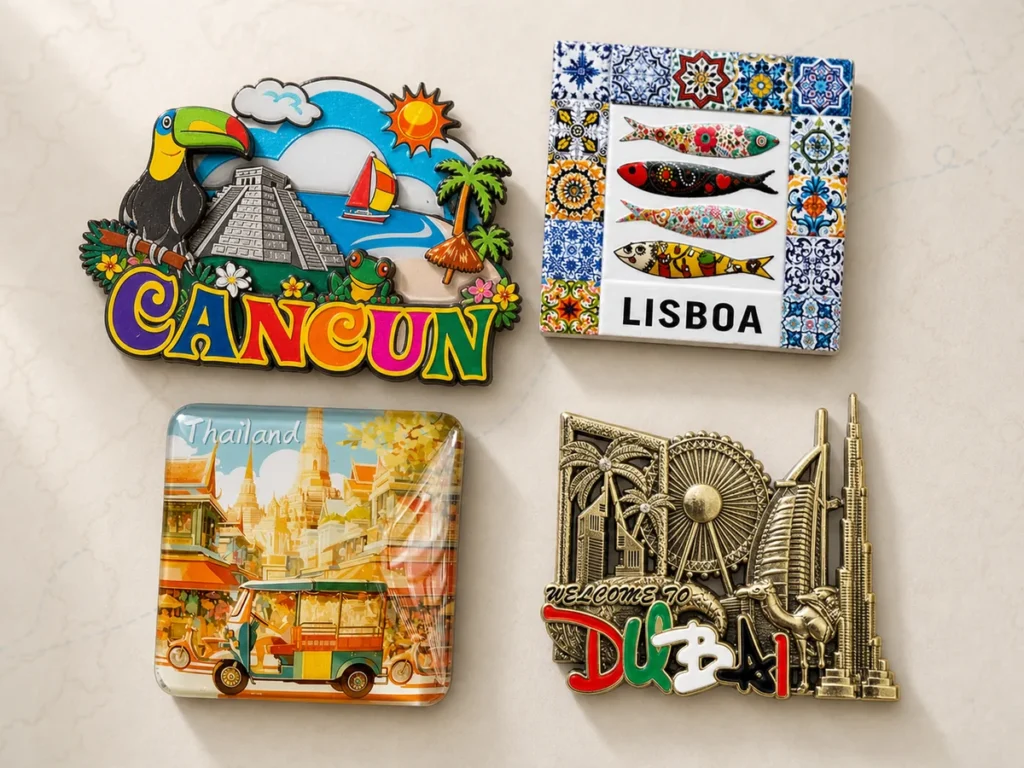
There is therefore no single best material for every custom souvenir fridge magnet. Polyresin may be ideal for a detailed 3D landmark, while metal is often better for a slim premium collectible. PVC works well for bright, playful designs; acrylic suits full-color artwork; and wood can give a destination collection a warmer, more natural appearance.
This guide compares nine popular souvenir fridge magnet materials so that gift shops, museums, tourist attractions, distributors and destination brands can choose more confidently.
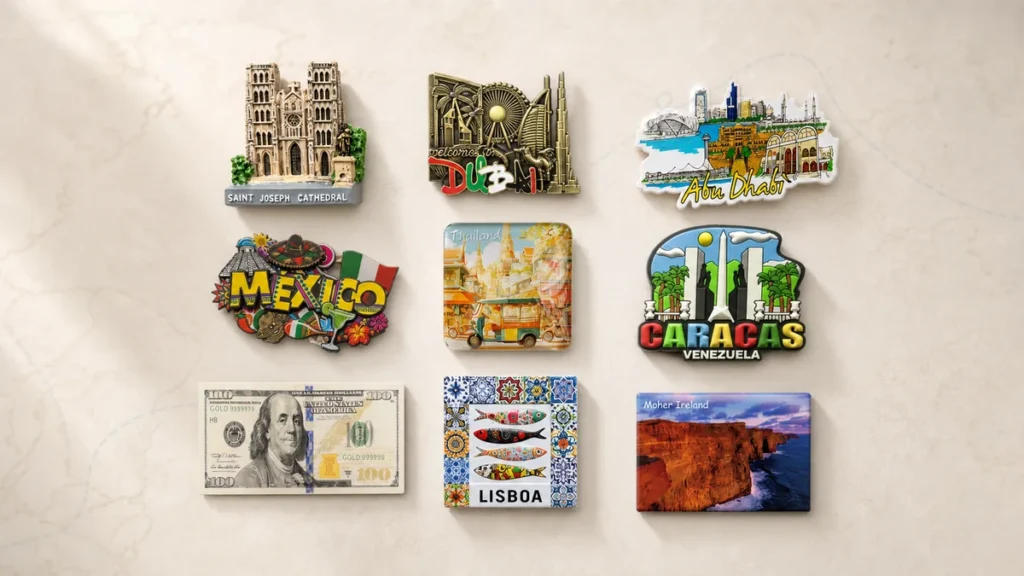
Quick Answer: Which Fridge Magnet Material Is Best?
For buyers who need a quick starting point:
- Choose polyresin for sculpted landmarks, buildings and detailed 3D scenes.
- Choose metal for premium, durable magnets with relief, plating or enamel color.
- Choose soft PVC for colorful, lightweight and playful designs.
- Choose acrylic for sharp full-color printing, photos and flat illustrations.
- Choose wood or MDF for natural, rustic or heritage-inspired collections.
- Choose ceramic for artistic, cultural and traditional souvenir designs.
- Choose crystal glass for glossy photographic or decorative artwork.
- Choose tinplate for affordable, lightweight, high-volume printed magnets.
- Choose aluminum foil for lightweight magnets with an embossed metallic effect.
The right choice still depends on the artwork, order quantity, intended retail price, product weight, magnet strength, packaging and shipping method.
Souvenir Fridge Magnet Materials Comparison
Relative cost levels in this table are for initial comparison only. Actual quotations depend on size, thickness, design complexity, order quantity, tooling, finish and packaging.
| Material | Best suited to | Detail and depth | Weight | Relative cost | Main advantage | Main trade-off |
|---|---|---|---|---|---|---|
| Polyresin | Landmarks, buildings, cultural scenes | Excellent 3D depth | Medium to heavy | $$–$$$ | Strong sculptural detail | More weight and more fragile projecting details |
| Metal | Museums, premium city souvenirs, emblems | Excellent relief | Medium | $$$ | Durable premium appearance | Tooling and finishing can increase cost |
| Soft PVC | Mascots, maps, flags, colorful icons | Good raised detail | Light | $$ | Flexible, colorful and tactile | Less suitable for photographic artwork |
| Acrylic | Photos, illustrations, modern flat designs | Excellent printed detail, limited depth | Light | $–$$ | Crisp full-color printing | Mainly a flat visual effect |
| Wood/MDF | Nature, heritage and rustic themes | Good engraving or printing | Light | $$ | Warm natural appearance | Grain and finish require control |
| Ceramic | Art, historic and cultural designs | Printed or moderate relief | Medium | $$–$$$ | Traditional collectible character | Breakable during handling and shipping |
| Crystal glass | Photographic and decorative designs | Clear printed image, little relief | Medium | $$ | Glossy, bright presentation | Breakable and may show glare or fingerprints |
| Tinplate | Vintage graphics and budget collections | Flat printed detail | Very light | $ | Economical for volume programs | Lower sculptural depth and perceived weight |
| Aluminum foil | Embossed city scenes and lightweight souvenirs | Shallow embossed relief | Very light | $–$$ | Metallic effect without heavy weight | Needs protective packaging against dents |
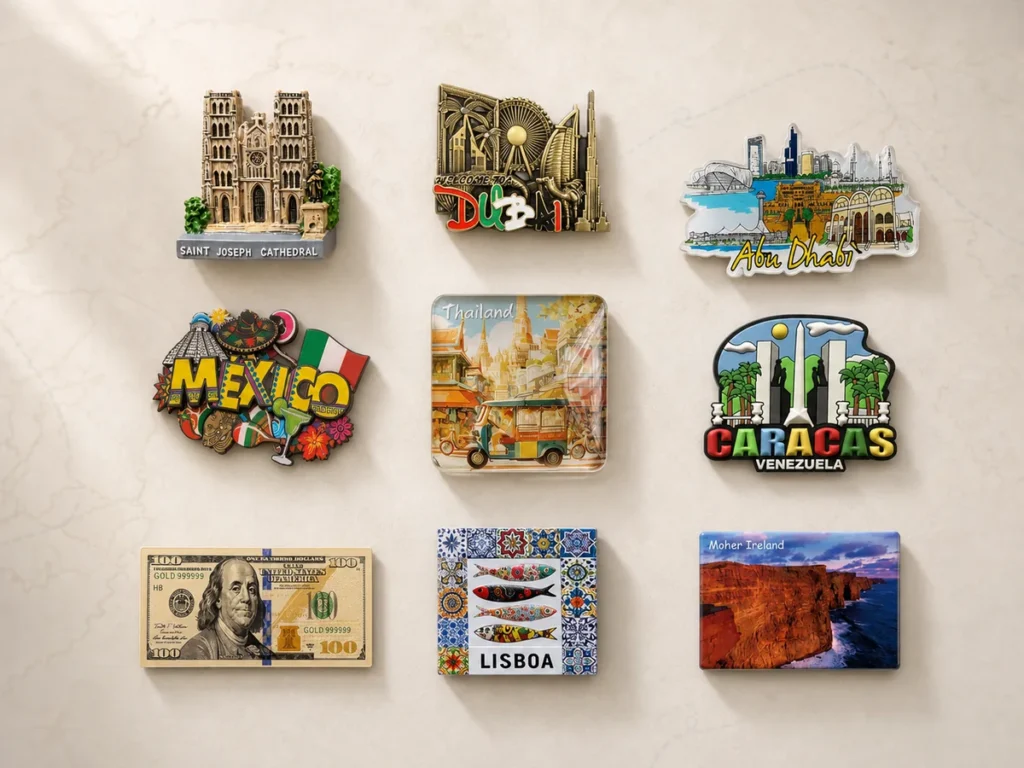
1. Polyresin Fridge Magnets: Best for Detailed 3D Landmarks
Polyresin is one of the strongest choices for custom tourist fridge magnets that need visible depth. It can reproduce buildings, monuments, animals, vehicles, local food and several destination icons within one sculpted composition.
A resin design can include raised roofs, windows, trees, lettering and foreground details. Hand painting or other color processes can then separate these elements and give the finished magnet a collectible appearance.
This makes polyresin magnets especially suitable for:
- Famous buildings and monuments
- City skylines
- Historic streets and architecture
- Zoos, aquariums and nature attractions
- Cultural characters or traditional objects
- Multi-element destination scenes
- Premium gift-shop collections
The main trade-offs are weight, breakability and production complexity. Thin towers, projecting signs and narrow decorative parts may need to be thickened during artwork development. Color consistency and small hand-painted details should also be checked carefully against the approved sample.
Polyresin is usually the better choice when sculptural storytelling matters more than minimum weight.
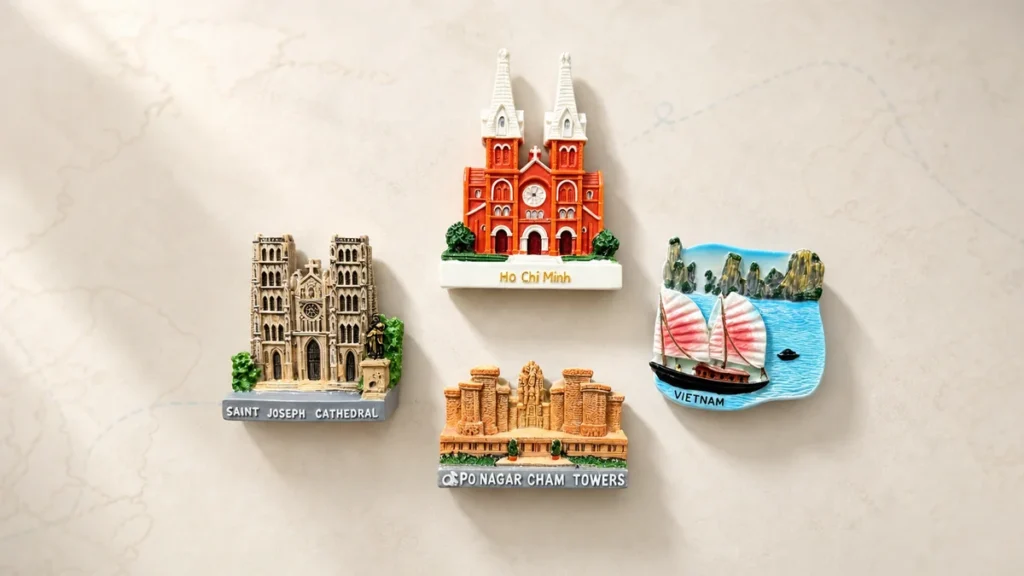
2. Metal Souvenir Magnets: Best for Premium and Durable Collections
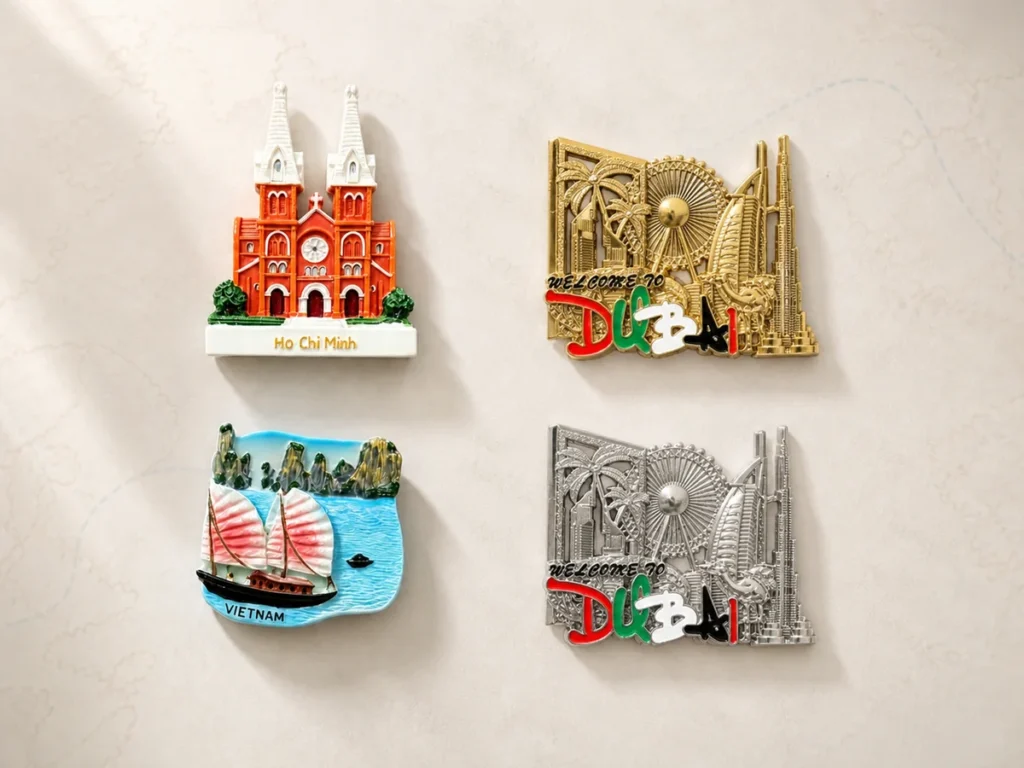
Metal fridge magnets create a slimmer, denser and more premium impression. Zinc alloy is commonly used for molded souvenir magnets with raised or recessed details. Plating, enamel color and antique finishes can then create different visual styles.
Metal works particularly well for:
- Museum and heritage collections
- City emblems and coats of arms
- Historic buildings and landmarks
- Minimalist destination icons
- Premium logos and branded merchandise
- Commemorative events
- Collectible magnet series
Antique bronze, silver or copper-style finishes can suit historic themes, while polished plating and colored enamel can create a cleaner contemporary appearance.
Compared with resin, metal usually produces crisper outlines and a thinner profile. It is also less vulnerable to the kind of chipped projecting detail sometimes found on complex resin pieces. However, mold, plating and enamel requirements can raise the initial development cost.
Choose metal when durability, perceived value and a refined finish are more important than full sculptural depth.
For a real-world example of how metal magnets can support a coordinated destination collection, see our New York souvenir magnet project.
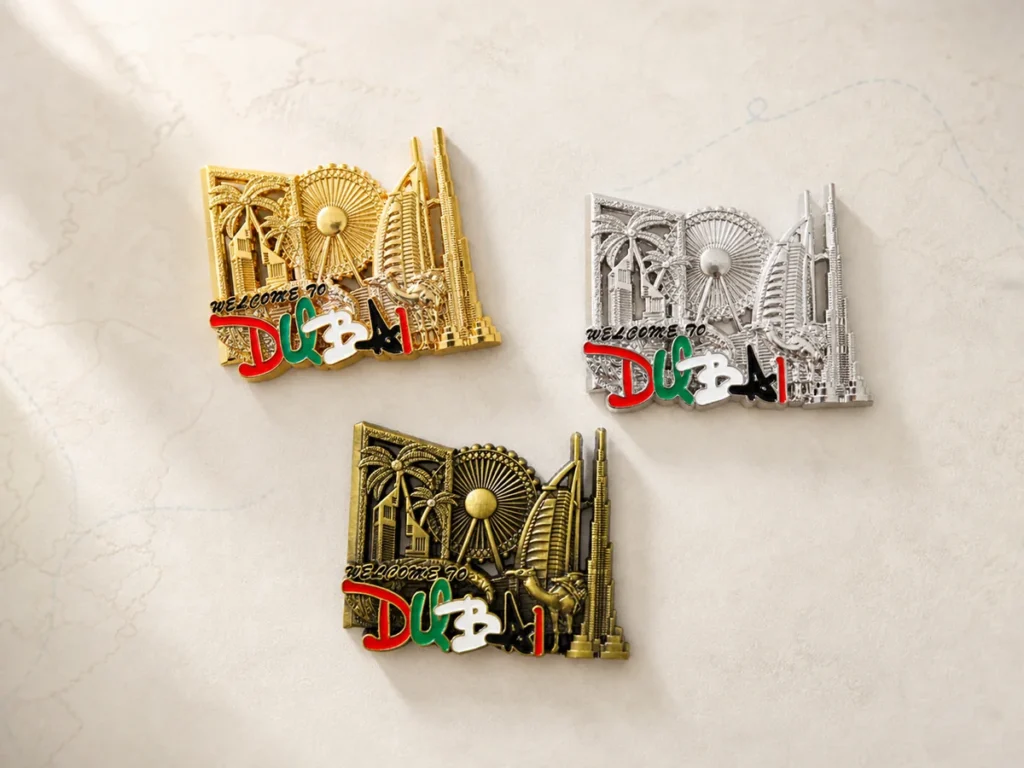
3. Soft PVC Fridge Magnets: Best for Bright and Playful Designs
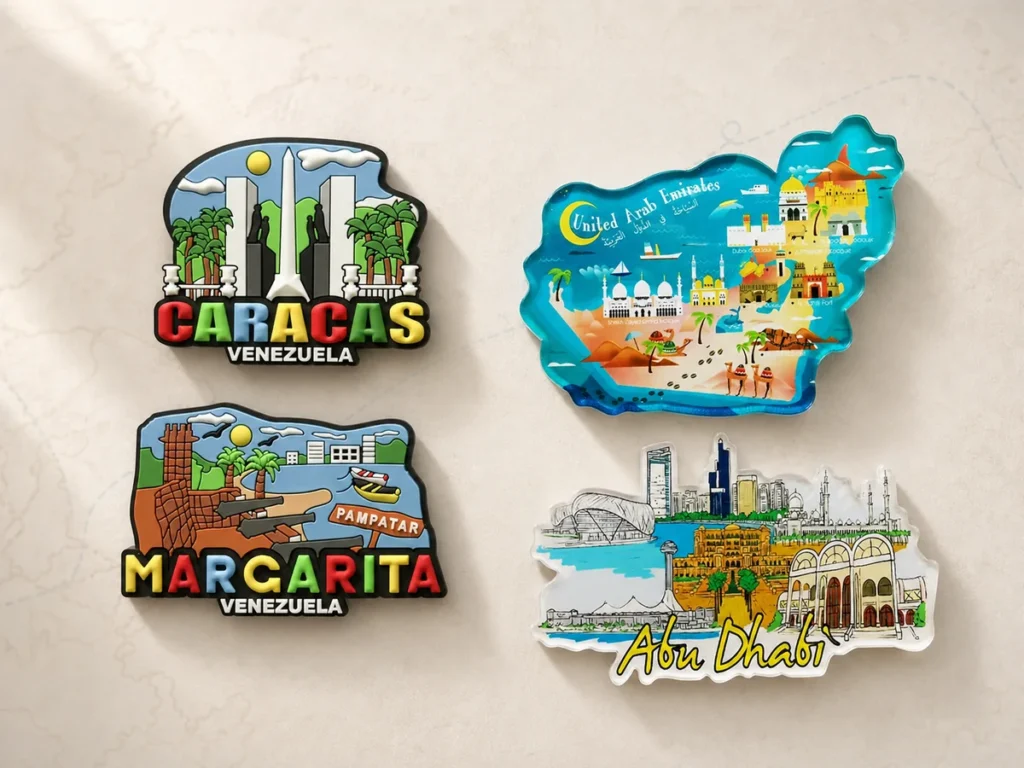
Soft PVC is a flexible molded material well suited to colorful designs with clearly separated shapes. Raised outlines can divide colors and create a tactile two-dimensional or shallow three-dimensional surface.
PVC fridge magnets are especially effective for:
- Cartoon landmarks
- Destination mascots
- Flags and maps
- Beach and resort designs
- Theme parks
- Children’s attractions
- Food and drink icons
- Promotional collections
Because PVC is lightweight and resistant to ordinary bumps, it can be practical for large collections and tourist products that will be handled frequently. Pantone-style color matching can also help keep a coordinated visual system across several designs.
PVC is less appropriate when the artwork depends on photography, subtle gradients or a traditional luxury finish. Molded lines and color areas need to be simplified enough to reproduce cleanly at the final size.
Choose PVC when the priorities are saturated color, flexibility, low weight and a friendly visual style.
4. Acrylic Fridge Magnets: Best for Full-Color Artwork and Modern Designs
Acrylic fridge magnets are a strong option for flat artwork that needs sharp lines and full-color printing. The material can be cut into custom outlines while preserving a clean, contemporary appearance.
Acrylic works well for:
- Destination photography
- Illustrated skylines
- Maps and travel posters
- Museum artwork
- Detailed logos
- Modern minimalist designs
- Event or seasonal collections
- E-commerce souvenir products
It is lighter than resin or metal and can be efficient to pack and ship. A clear edge can become part of the design, while opaque or layered constructions can create alternative effects.
The main limitation is depth. Although layered acrylic can add dimension, the product remains more graphic than sculptural. Surface scratches, printed-edge quality and the alignment of the magnetic backing should be reviewed during sampling.
Choose acrylic when accurate printed detail, light weight and a modern appearance matter more than molded relief.
5. Wooden and MDF Fridge Magnets: Best for Natural and Heritage Themes
Wood and MDF can give tourist fridge magnets a warm, tactile appearance. Depending on the design, the surface can be laser engraved, printed, cut into a custom outline or combined with additional decorative layers.
Suitable themes include:
- National parks and nature reserves
- Mountain, forest and coastal destinations
- Historic towns
- Folk-art collections
- Craft museums
- Eco-style visual identities
- Rustic gift shops
- Minimalist travel illustrations
Natural wood can show variation in grain and tone, while MDF provides a more uniform surface for printing. Buyers should decide whether this variation is part of the desired character or whether a highly consistent appearance is required.
Finish quality, edge color, moisture resistance and print adhesion should be reviewed before mass production. Environmental claims should only be used when the material source and supporting documentation have been confirmed.
Choose wood when a natural visual identity and tactile warmth are central to the collection.
For buyers looking for a natural, craft-inspired finish, explore our custom wooden fridge magnets for available shapes, printing and packaging options.
6. Ceramic Fridge Magnets: Best for Artistic and Cultural Souvenirs
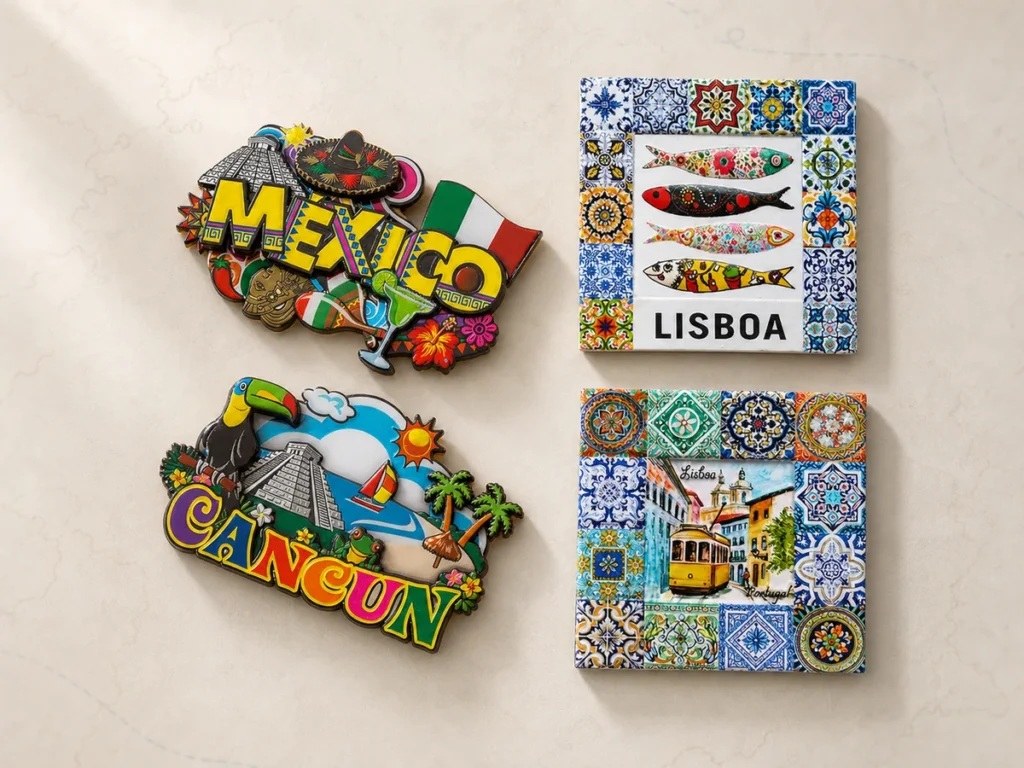
Ceramic magnets can create a traditional, crafted or artistic character. They work well for historic destinations, decorative artwork and collections where material feel is part of the souvenir’s appeal.
Ceramic is suitable for:
- Museums and galleries
- Historic buildings
- Cultural patterns
- Traditional food or craft themes
- Coastal and Mediterranean-style collections
- Decorative tiles
- Hand-painted souvenir concepts
Designs may use printing, glazing, molded detail or painted decoration. The finished surface can feel more substantial than a flat printed magnet and can support a higher-value presentation.
Its primary disadvantage is breakability. Product shape, edge thickness, individual protection and export-carton structure need to be considered together. Very thin projecting areas should be avoided.
Choose ceramic when the product needs an artistic or traditional identity and the packaging can provide appropriate protection.
7. Crystal Glass Fridge Magnets: Best for Glossy Images
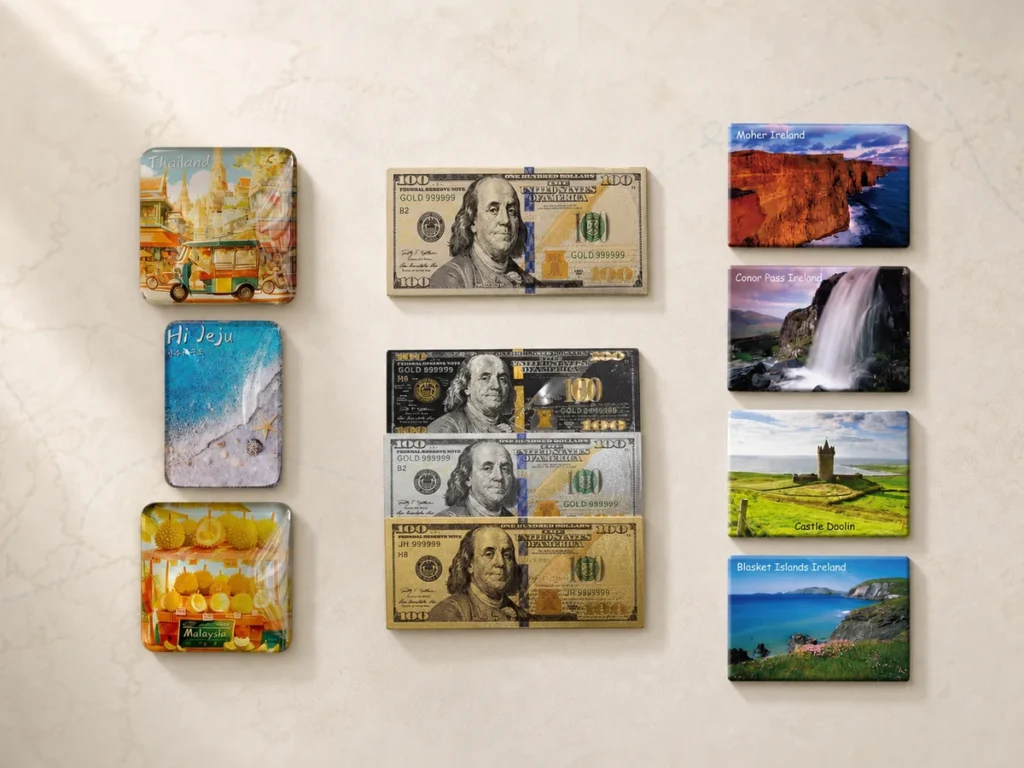
Crystal glass fridge magnets can give photography and printed artwork a bright, glossy appearance. The transparent or polished surface adds visual depth even when the underlying design is flat.
Common applications include:
- City photographs
- Famous paintings
- Scenic landscapes
- Museum collections
- Historic portraits
- Decorative travel artwork
- Premium photo souvenirs
Glass can make colors appear vivid and can suit gift shops that want a polished alternative to ordinary printed magnets. However, glare, fingerprints, edge quality and image alignment should be checked on the physical sample.
Like ceramic, glass requires protective packaging. Product weight and carton structure should also be considered when planning international shipping.
Choose crystal glass when image clarity and a glossy decorative finish justify the additional handling requirements.
8. Tinplate Fridge Magnets: Best for Budget-Friendly Printed Collections
Tinplate magnets usually use printed graphics in a lightweight formed structure. They can support strong color, vintage artwork and simple city designs without the weight of metal-alloy or resin products.
They are useful for:
- Retro travel posters
- City maps and skylines
- Tourism campaigns
- Seasonal designs
- Budget gift-shop ranges
- High-volume destination programs
- Promotional giveaways
- Large mixed-design collections
Tinplate is attractive when buyers need an affordable retail item or want to test many designs within one collection. It is light and comparatively easy to transport.
The trade-off is perceived depth. A tinplate magnet will not provide the sculptural detail of resin or the dense premium feel of die-cast metal. Printing, edge formation, corrosion protection and resistance to dents should be evaluated during sampling.
Choose tinplate when printed impact, low weight and economical volume production are the leading priorities.
9. Aluminum Foil Fridge Magnets: Best for Lightweight Embossed Effects
Aluminum foil magnets can combine a metallic appearance with shallow embossed detail. They are useful when a buyer wants more texture than a flat print but less weight than a cast-metal product.
Typical applications include:
- City buildings
- Landmark outlines
- Maps
- Traditional travel scenes
- Metallic illustrations
- Lightweight souvenir ranges
- Budget-to-mid-range collections
Embossing can highlight architecture, lettering and borders. Printed or colored areas can then add more visual separation.
Because the surface is relatively light, packaging should prevent bending, scratching and dents. Buyers should inspect embossed definition, edge finishing and surface consistency before approving bulk production.
Choose aluminum foil for lightweight metallic souvenirs where shallow relief is sufficient.
Resin vs Metal vs PVC vs Acrylic Fridge Magnets
These four materials cover many custom souvenir magnet projects, but they solve different design problems.
Resin vs Metal Fridge Magnets
Choose resin when the design needs strong 3D modeling, several sculpted objects or a miniature-scene appearance. Choose metal when the design needs cleaner relief, a thinner profile, premium weight, enamel color or antique plating.
A highly detailed historic street may work better in polyresin. A museum emblem or simplified landmark silhouette may work better in metal.
Resin vs PVC Fridge Magnets
Both resin and PVC can produce raised details, but their visual characters differ.
Resin creates a harder, more sculptural object and supports hand-painted depth. PVC is softer, lighter and better suited to clean color blocks, mascots and cartoon-style designs.
Choose resin for realistic architecture and collectible destination scenes. Choose PVC for playful, colorful products that will be handled frequently.
PVC vs Acrylic Fridge Magnets
PVC creates molded, tactile color areas. Acrylic preserves printed lines, gradients, photos and small graphic details more effectively.
Choose PVC when touch, flexibility and raised shapes matter. Choose acrylic when the artwork should remain close to the original digital image.
How to Match Material to the Retail Scenario
| Buyer or retail goal | Recommended materials | Reason |
| Detailed landmark or miniature building | Polyresin or metal | Supports sculpted or relief detail |
| Premium museum collection | Metal, polyresin, ceramic or glass | Stronger perceived value |
| Colorful mascot or family attraction | Soft PVC or acrylic | Bright color and manageable weight |
| Photo or travel-poster artwork | Acrylic or crystal glass | Preserves printed imagery |
| Natural or heritage visual identity | Wood, ceramic or antique-finish metal | Material supports the theme |
| Budget, high-volume program | Tinplate, aluminum foil or acrylic | Lightweight printed options |
| Lightweight international shipment | PVC, acrylic, tinplate or aluminum foil | Lower product and carton weight |
| Mixed-price gift-shop display | Combine two or three materials | Creates entry, mid-range and premium choices |
A buyer does not always need to select only one material. A destination collection can use acrylic for its entry-price range, PVC for colorful family designs and resin or metal for premium landmarks.
The collection should still share a consistent visual system: the same city name treatment, color palette, illustration style, packaging and product story.
For more ideas on product design, packaging and retail presentation, read our guide to fridge magnets for tourist attractions.
What Affects the Cost of Custom Souvenir Fridge Magnets?
Material is only one part of the final price. Two magnets made from the same material can have very different costs.
Important factors include:
1. Size and thickness
Larger or thicker products use more material and add carton weight. Unnecessarily thick specifications can raise both production and shipping costs.
2. Number of designs
A mixed collection may have separate artwork, samples, molds and minimum quantities for every design. Buyers should ask whether pricing and MOQ are calculated per design or across the combined order.
3. Mold and tooling
Polyresin, metal, PVC and other molded constructions may require separate tooling. Flat printed materials can sometimes reduce initial development requirements, depending on the construction.
4. Design complexity
Deep relief, undercuts, fine lettering, projecting parts and many small painted areas require more development and quality control.
5. Color and surface finish
Hand painting, plating, enamel, protective coatings, laser engraving, UV printing and layered effects have different cost structures.
6. Magnetic backing
The magnet’s size, thickness, position and holding strength must match the finished product’s weight. A weak or poorly positioned backing can make an otherwise attractive product unusable.
7. Packaging
Bulk packing may reduce packaging cost, but retail buyers may need individual bags, backing cards, barcodes, display boxes or gift boxes.
8. Order quantity and freight
A lower unit price does not automatically create the best landed cost. Product weight, carton volume, shipping method and destination charges should be considered with the factory quotation.
How to Develop a Material-Appropriate Magnet
A reliable development process connects design, material, sampling, quality control and packaging.
Step 1: Define the retail brief
Clarify the destination, target customer, expected retail position, sales channel, estimated quantity, packaging and delivery market.
Step 2: Shortlist two suitable materials
Instead of asking for every possible construction, compare the two materials that best match the artwork and commercial goal.
Step 3: Adapt the artwork for production
Review text size, line thickness, color separation, relief depth and projecting details at the actual product size. Artwork that looks clear on a large screen may not reproduce well on a small souvenir.
Step 4: Produce and evaluate a sample
Check the sample under normal lighting and at actual viewing distance. Compare it with the approved artwork, not only with digital photographs.
Step 5: Test the complete product
Review:
- Dimensions and weight
- Color and print accuracy
- Relief or engraving detail
- Edge finishing
- Surface scratches or defects
- Magnet position and holding performance
- Packaging fit
- Barcode and label placement
- Drop and carton protection where appropriate
Step 6: Approve a reference sample
The approved physical sample and written specification should guide mass production and final inspection.
Packaging Should Match the Material
Packaging is both a protection system and a retail tool.
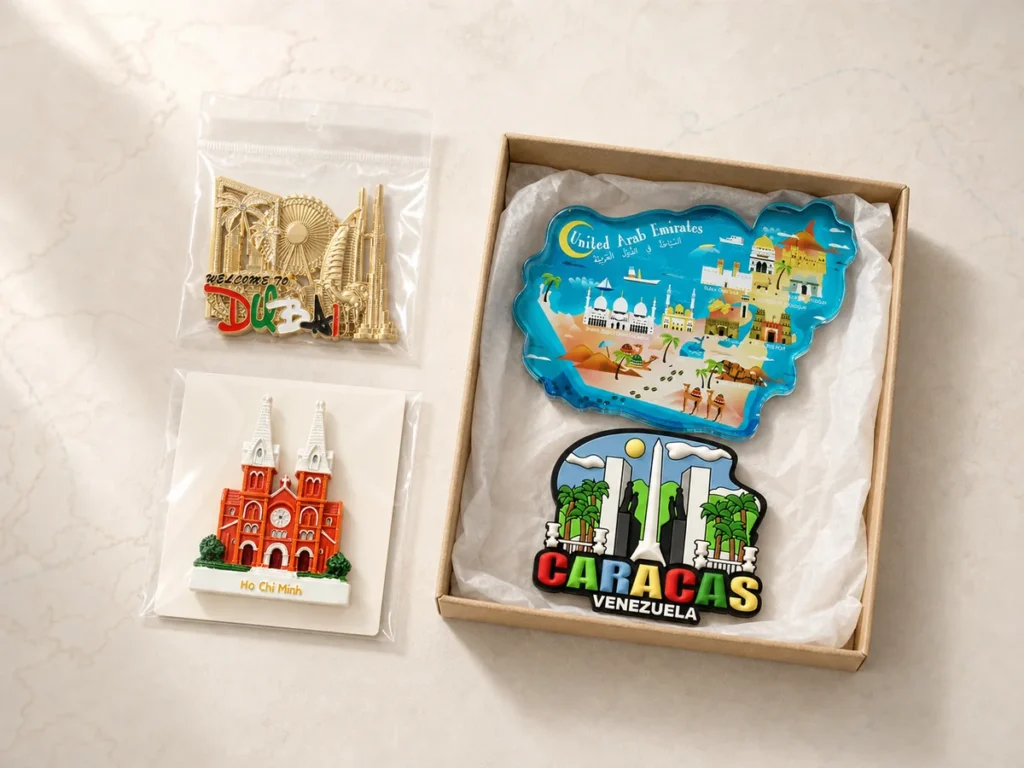
Lightweight acrylic, PVC, tinplate and foil magnets may use individual bags or branded backing cards. Premium metal magnets can also use backing cards, display packaging or gift boxes.
Resin, ceramic and glass need more attention to surface protection, projecting details and movement inside the carton. Dividers, inner boxes or stronger protective structures may be appropriate depending on the shape and shipment method.
For wholesalers, packaging can also support counting and distribution. For example, individually packed magnets may be grouped into dozen-based inner packs and then placed into export cartons.
Final Takeaway
The best material for custom souvenir fridge magnets is the one that turns the artwork into a commercially suitable product.
Polyresin provides the strongest sculptural depth. Metal offers durability and a premium finish. PVC is colorful and lightweight. Acrylic preserves printed detail. Wood creates a natural appearance, while ceramic and glass suit decorative or cultural collections. Tinplate and aluminum foil provide practical lightweight options for price-sensitive programs.
Before choosing, compare material together with product size, design count, tooling, magnet strength, packaging, target retail position and landed shipping cost. A well-matched material makes the magnet easier to produce, easier to sell and more faithful to the destination it represents.
Frequently Asked Questions About Souvenir Fridge Magnet Materials
1. What materials are commonly used for custom souvenir fridge magnets?
The most common materials are polyresin, metal, soft PVC, acrylic, wood, ceramic, crystal glass, tinplate and aluminum foil. Each material provides a different balance of 3D detail, weight, durability, printing quality, production cost and retail positioning.
2. What is the best material for custom souvenir fridge magnets?
There is no single best material for every project. Polyresin is ideal for sculpted landmarks, metal suits durable premium souvenirs, soft PVC works well for colorful and lightweight designs, while acrylic, glass and tinplate are suitable for printed artwork. The best choice depends on your design, target price, order quantity, packaging and sales channel.
3. Which fridge magnet material is best for detailed 3D landmarks?
Polyresin is usually the best choice for deeply sculpted buildings, monuments, animals and cultural icons because it can reproduce complex shapes and hand-painted details. Metal is another strong option when the design needs crisp embossed lines, a thinner profile and a more durable premium finish.
4. What is the difference between polyresin and soft PVC fridge magnets?
Polyresin magnets are rigid and can create deeper, more realistic three-dimensional relief, making them suitable for landmark and collectible souvenir designs. Soft PVC magnets are flexible, lighter and especially effective for colorful maps, mascots, logos and cartoon-style artwork. PVC is generally easier to pack and transport, while resin offers a more sculptural appearance.
5. Which material is best for photographs or full-color destination artwork?
Acrylic and crystal glass are good choices for detailed photographs, illustrations and full-color city artwork. Crystal glass provides a glossy, premium-looking surface, while acrylic is lighter and easier to customize into different shapes. Tinplate and aluminum foil are more economical alternatives for high-volume printed designs.
6. Which souvenir fridge magnet material is the most durable?
Metal fridge magnets are among the most durable options and are suitable for long-term retail programs and premium destination collections. Soft PVC also performs well because it is flexible and resistant to breakage. Polyresin, ceramic and crystal glass can provide excellent visual quality but normally require more protective packaging during transport.
7. What is the most economical material for bulk souvenir magnet orders?
Tinplate, printed acrylic and aluminum foil are often suitable for price-sensitive or high-volume orders because they are lightweight and efficient to produce. Soft PVC can also be cost-effective for repeat orders after the mold has been developed. Final pricing still depends on size, quantity, artwork, mold requirements, printing method, finish and packaging.
8. When should buyers choose wooden or ceramic fridge magnets?
Wooden fridge magnets are suitable for destinations, resorts and gift shops that want a natural, handcrafted or lifestyle-oriented appearance. Ceramic magnets work especially well for traditional artwork, museum themes, decorative patterns and cultural designs such as Portuguese azulejo tiles. Buyers should consider moisture protection for wood and protective packaging for ceramic products.
9. Can the same destination design be produced in different materials?
Yes. A landmark, city skyline, map, logo or cultural motif can often be developed across resin, metal, PVC, acrylic and other materials. However, the artwork should be adapted to each production process because relief depth, line thickness, color separation, printing detail and edge shape work differently in each material.
10. How does the material affect MOQ, sampling, packaging and shipping?
MOQ and sampling requirements depend on the material, production process and whether a new mold is needed. Resin, metal and soft PVC designs commonly require custom molds, while printed acrylic, glass and tinplate designs may use different setup methods. Heavy or fragile materials need stronger protective packaging, whereas acrylic, PVC, tinplate and aluminum foil are generally lighter and more economical to ship. For an accurate recommendation, buyers should provide the artwork, required size, quantity, target market, price range and packaging requirements.
Need Custom Souvenir Fridge Magnets for Your Store, Museum or Tourist Attraction?
Send us your destination theme, artwork, preferred materials, quantity and packaging requirements. Yiwu Superstar Creation can help you compare resin, metal, soft PVC, acrylic, wood, ceramic, crystal glass, tinplate and aluminum foil options for your custom souvenir fridge magnet collection.