A custom plush toy can look ready for production while its test scope, material records or label artwork is still unresolved. EU buyers need to settle these points during sampling, especially when the finished toys will be imported under their brand. This guide follows the decisions a buyer and supplier should make before mass production, from the first brief through laboratory testing and import checks.
The focus is custom plush toys intended for the EU market. Requirements depend on the actual design, intended user, materials and destination. For UK or US projects, review the separate market-specific requirements rather than applying this EU checklist unchanged.
What should an EU buyer confirm before sampling a custom plush toy?
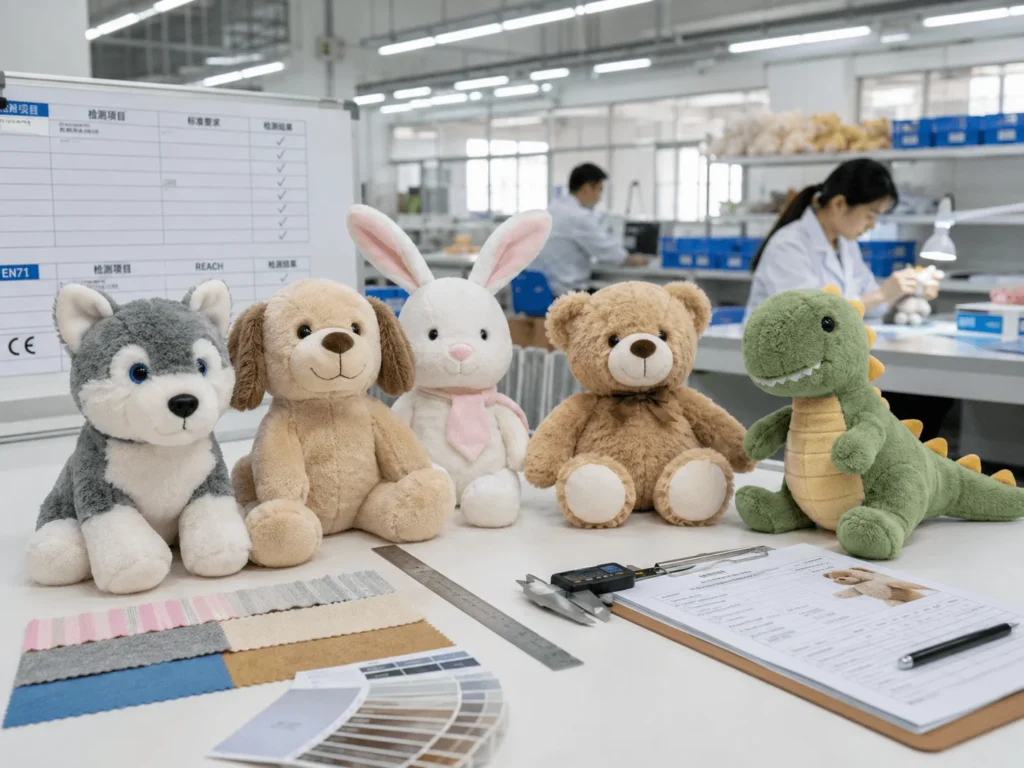
Start with the product definition, not a list of certificates. The supplier and buyer should agree on the toy’s intended age group, size, construction, use and sales markets. A plush character with a ribbon, plastic eyes or a sound module may require a different safety assessment from a plain embroidered-face toy.
- Design reference, dimensions, construction drawings and intended age group.
- Fabric, filling, thread, embroidery, printed or coated details, plastic and metal accessories.
- Detachable parts, cords, magnets, batteries, sound or light functions, if any.
- Packaging format, planned warnings and the languages needed for the destination market.
- Who will be identified as manufacturer and importer, and who will maintain the technical documentation.
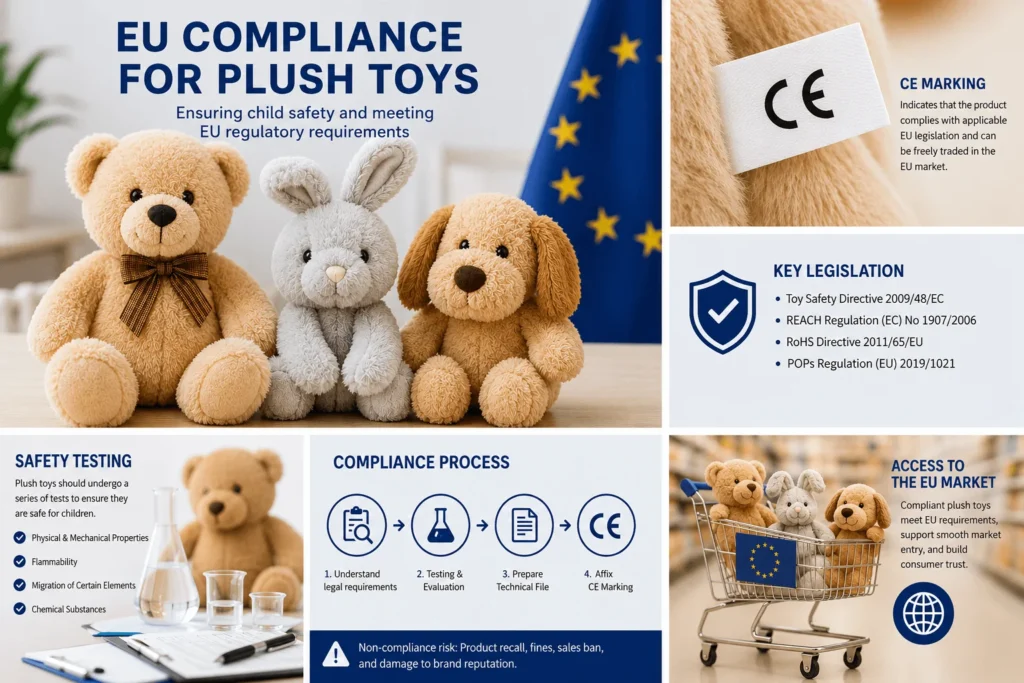
The applicable EU framework today is Toy Safety Directive 2009/48/EC. The newer Regulation (EU) 2025/2509 entered into force in 2026 but its main rules apply from 1 August 2030. A current project should follow the rules applicable when it is placed on the market and monitor the transition if its launch is later. Check the European Commission’s current toy-safety guidance.
Which EN 71 and REACH checks apply to this plush toy?
EN 71 is a series of toy-safety standards, not a single all-purpose test. The lab should confirm the current applicable harmonised editions and test plan against the finished design and age grading. For many non-electronic plush toys, the starting discussion includes:
| Requirement | What the buyer and laboratory should examine |
|---|---|
| EN 71-1 | Mechanical and physical hazards, including seams, accessible filling, small parts, eyes, noses, ribbons and other attachments. |
| EN 71-2 | Flammability of the finished toy and its relevant materials or components under the applicable test method. |
| EN 71-3 | Migration of specified elements from accessible toy materials. This does not by itself clear every chemical restriction. |
| REACH and other applicable chemical restrictions | Review relevant substances for each material and component, such as certain phthalates in plasticised parts or restricted azo colourants in applicable textiles. |
| EN IEC 62115, when relevant | Assess electrical safety if the design includes an applicable battery, sound, light or other electrical function. |
A named laboratory such as SGS, Bureau Veritas, Intertek or TÜV can be considered if the buyer requests one. Confirm the specific lab’s accreditation and scope for the proposed methods, and make sure its report identifies the correct product and tested materials. A laboratory brand name alone does not show that a new design has passed.
How should the BOM and existing material reports shape the testing plan?
Request a controlled bill of materials (BOM) for the proposed sample. It should identify each fabric, filling, thread, label, print, eye, nose and accessory, with material specifications or supplier references where available. Link each existing material report to its exact material and colour or finish, its test method, date and supplier. If a report does not identify the component used in this toy, ask the lab whether it is useful background evidence.
An earlier fabric report may help the risk review, but it cannot automatically certify the assembled plush toy. Seam strength, attachment security, accessible materials and final construction must be assessed on the finished product. If the buyer needs a commercially sensitive BOM, the parties can agree on a controlled version for the laboratory and technical file rather than publishing supplier information.
For examples of the types of project documents we can help coordinate, see our plush toy testing and documentation page. Its anonymised report previews relate to other specific projects; they are not test results for a new order.
When should the pre-production sample be sent for independent testing?
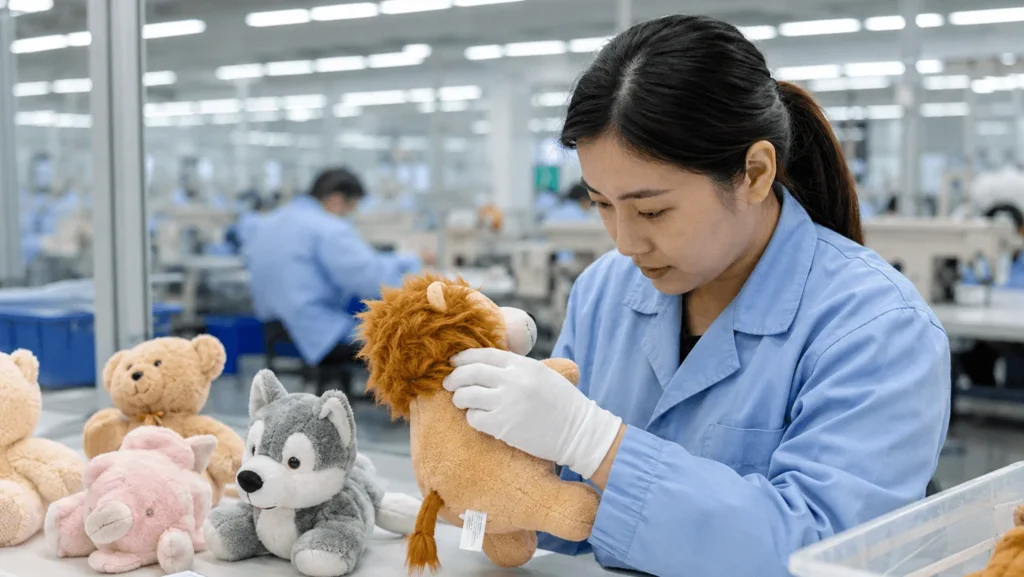
Send a production-representative sample after the buyer has approved its construction and the BOM version. Record the model, size, colourway, component sources, artwork, label draft and sample date. The independent lab and EU buyer should agree on sample quantity, variants and test scope before shipment to the lab. Ask whether one tested variant can represent others; never assume that different colours, sizes or accessories are covered.
If the test identifies a problem, revise the design or materials and agree with the lab what must be tested again. Before releasing mass production, compare the approved sample, BOM and lab report with the production specification. A change to fabric, filling, attachment, coating or battery module can change the compliance assessment even when the toy still looks similar.
Who prepares the EC Declaration of Conformity and applies the CE mark?
The manufacturer must perform the required safety and conformity assessment, prepare technical documentation, draw up the EC Declaration of Conformity and affix CE marking. The EU importer must check that the manufacturer has done this, that the documentation can be made available, and that the toy carries the required identification and safety information. The legal roles depend on how the product is made and branded; agree on them before approving artwork. The European Commission explains each operator’s duties.
A test report supports the file but is not itself a “CE certificate” covering all toys from a factory. EU toy rules allow different conformity-assessment routes depending on the circumstances. An independent accredited-lab report may still be a buyer’s contractual requirement, as it is for many import orders.
What belongs on the sewn-in label, packaging and warnings?
A buyer may ask for a sewn-in care and compliance label with the CE mark, EU importer address and batch or model number. That is a useful artwork brief, but the final label review must also account for the manufacturer’s identification, toy traceability, any required warnings and the destination market’s language rules. The EU rules permit CE marking on the toy, an affixed label or packaging, subject to the applicable placement requirements; a sewn-in label is not the only possible format.
- Confirm manufacturer and EU importer names and contact addresses in their correct legal roles.
- Set a model, type, batch or serial identifier that links the toy to the production and document records.
- Review CE mark size and placement, warnings, age information and required language with the importer and laboratory.
- Check that the label artwork, hangtag and retail packaging agree with the tested model and approved BOM.
- Approve a physical label sample before mass sewing; record any later artwork or component change.
What should a French importer verify before the shipment is placed on the EU market?
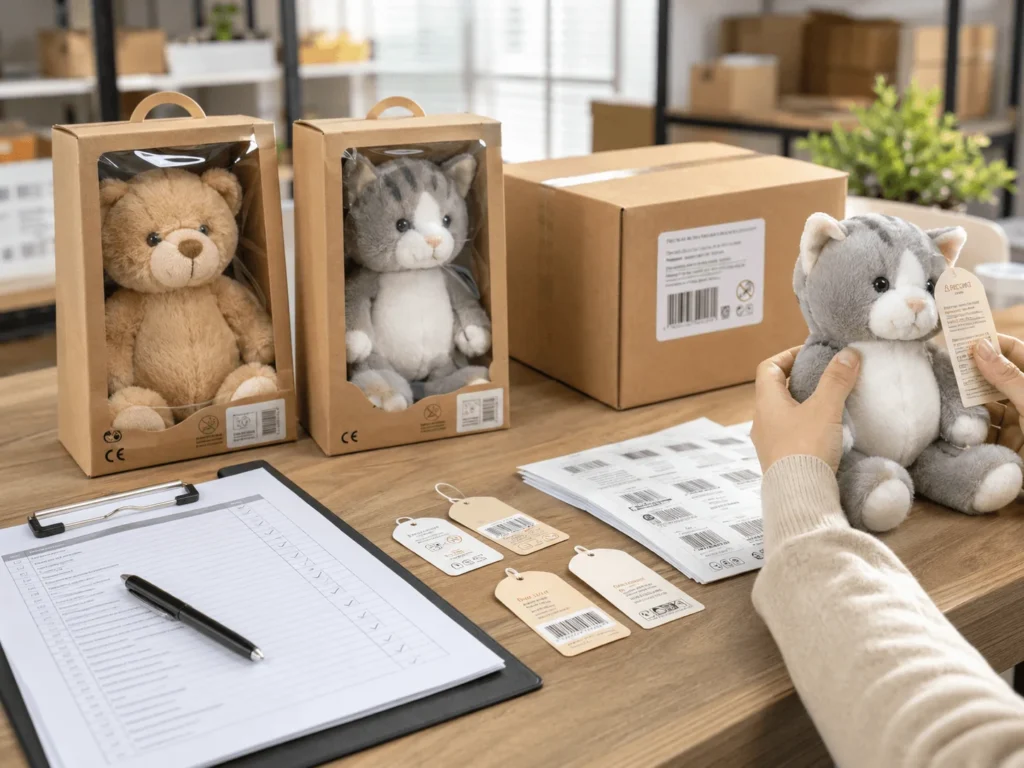
Self-clearing the goods in France does not remove the importer’s product-safety checks. Before shipment, match the commercial model and batch to the approved sample, final BOM, applicable reports, EC Declaration of Conformity, CE marking and manufacturer/importer information. Check the required French-language warnings or instructions for the actual product. Keep the relevant records available for a market-surveillance request.
The laboratory can advise on test scope, while the importer and the legally responsible manufacturer should confirm that the declarations and labels describe the exact goods being supplied. For a changed design or an additional destination market, repeat the applicability review instead of copying an old report or declaration.
What should you send us to plan a compliant custom plush project?
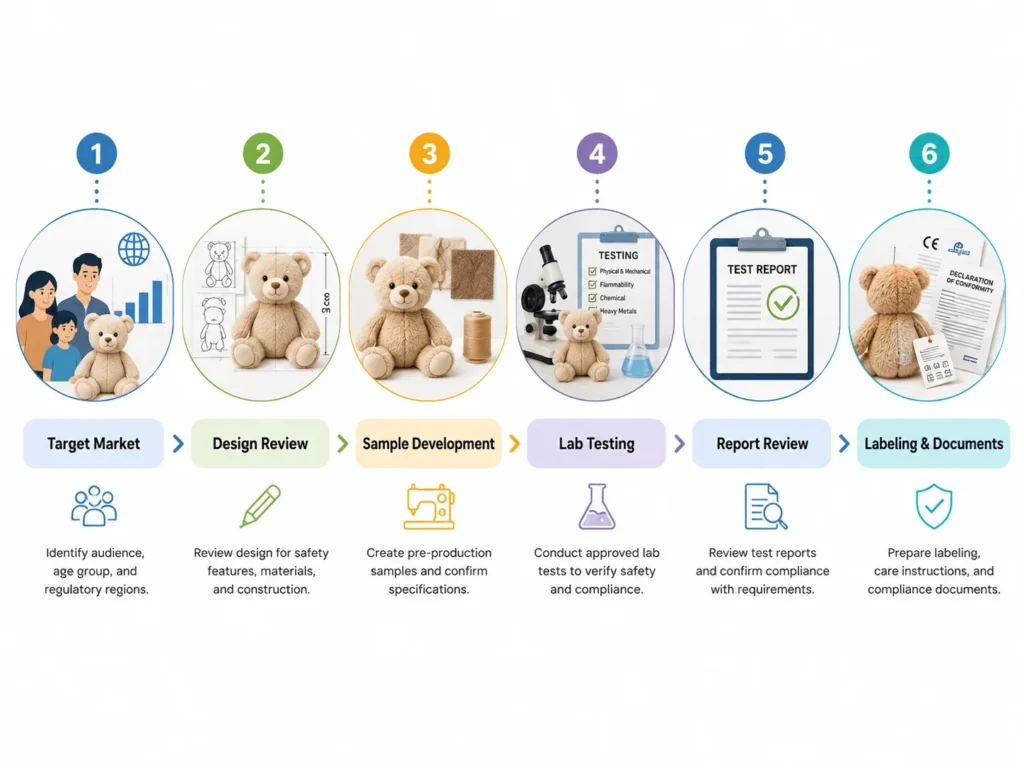
Send the toy artwork or reference, target size, intended age group, EU destination, quantity, proposed materials and accessories, and any lab, label or documentation requirements from your importer. If you already have material reports or a draft label, include them for review. We can discuss sampling, material confirmation and third-party testing coordination for the specific product; the lab must confirm the scope and schedule after seeing the final brief.
You can also browse our custom plush toy collection to identify the product type. If your project includes weighted filling, read the weighted plush development guide before fixing the construction and test sample.
Frequently asked questions
Do custom plush toys sold in the EU need CE marking?
Yes, when the product is a toy placed on the EU market. CE marking follows the applicable conformity assessment and must be supported by technical documentation and an EC Declaration of Conformity.
Is an EN 71 test report the same as a CE certificate?
No. EN 71 reports can support the conformity file, but they do not replace the safety assessment, technical documentation, EC Declaration of Conformity or correct CE marking.
Which EN 71 parts should a plush toy buyer discuss with the lab?
EN 71-1, EN 71-2 and EN 71-3 are common starting points for a non-electronic plush toy. The exact current methods and any additional requirements depend on the finished design, intended age group and materials.
Does an EN 71-3 result also prove REACH compliance?
No. EN 71-3 addresses migration of specified elements. Applicable REACH restrictions and other chemical requirements must be reviewed separately for the actual materials and components.
Can we use an older fabric report for a new plush design?
It may support a material review if it matches the exact material, colour and supplier, but it does not automatically cover a new finished toy. Ask the lab to assess report relevance and the final test scope.
Can one report cover different colours, sizes or accessories?
Possibly, but only if the laboratory confirms that the selected samples and materials represent those variants. Do not assume a report covers changes that are not identified in its scope.
When should a pre-production plush sample go to the laboratory?
After the buyer has approved a production-representative sample and the BOM and component sources are recorded. Confirm the number of samples, variants and tests with the laboratory before mass production.
Does a plush toy with a sound or light module need electrical testing?
An applicable electrical function can add electrical toy safety requirements, including EN IEC 62115 where relevant. The lab should evaluate the complete design and current harmonised standards.
Must the CE mark and importer address be on a sewn-in care label?
A sewn-in label can be part of the agreed solution. The final placement of CE marking, manufacturer and importer information, traceability details and warnings must be checked against the applicable rules and actual packaging.
Who provides the EC Declaration of Conformity for an EU order?
The legally responsible manufacturer draws it up after the applicable assessment; the EU importer must verify and retain the required documentation. The buyer and supplier should agree their roles and document handover for the specific branded product.
Ready to Review Your Plush Toy Compliance Brief?
Share your toy design, target market, intended age group, sample status and documentation needs. We can review the project details before quotation and testing coordination.